Topics:
Bumper:
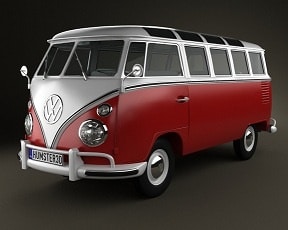
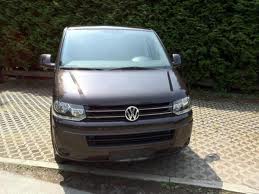
Bumpers are fitted to the front and rear of the car with the aim of protecting the car’s bodywork as much as possible in a minor collision. In the past, bumpers were often heavily built and even fairly severe collisions caused relatively little damage. Nowadays, bumpers are made of plastic and are streamlined into the car’s design. The disadvantage of these bumpers is that they get damaged very quickly. Even a small nudge from another car can cause cracks in the paint, or the bumper to visibly crack.
Shock-absorbing bumper:
The bumper with shock-absorbing components protects the vehicle body in light collisions up to 8 km/h.
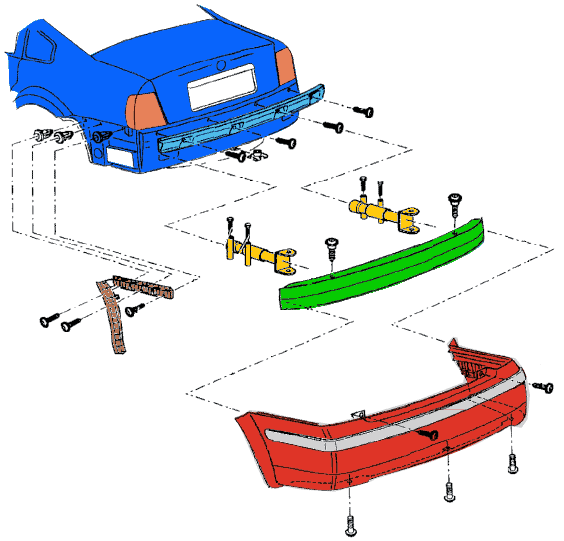
The image shows the components of the shock-absorbing rear bumper. The vehicle body is coloured dark blue. The light-blue strip is a mounting strip for, among other things, the wiring of the PDC sensors.
The metal bumper beam (green) is screwed onto the body by means of shock absorbers (green). The shock absorbers have the property of sliding into each other in the event of a collision; the force of the collision is absorbed in this way. The shock absorbers become deformed and therefore remain permanently deformed.
The rear bumper (red) is slid into the guide pieces (brown) during installation. After the bumper has been slid in, it is finally secured with a number of bolts.
The front bumper is fitted with similar shock-absorbing components.