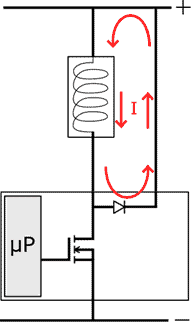
Circuit of a PWM-controlled valve:
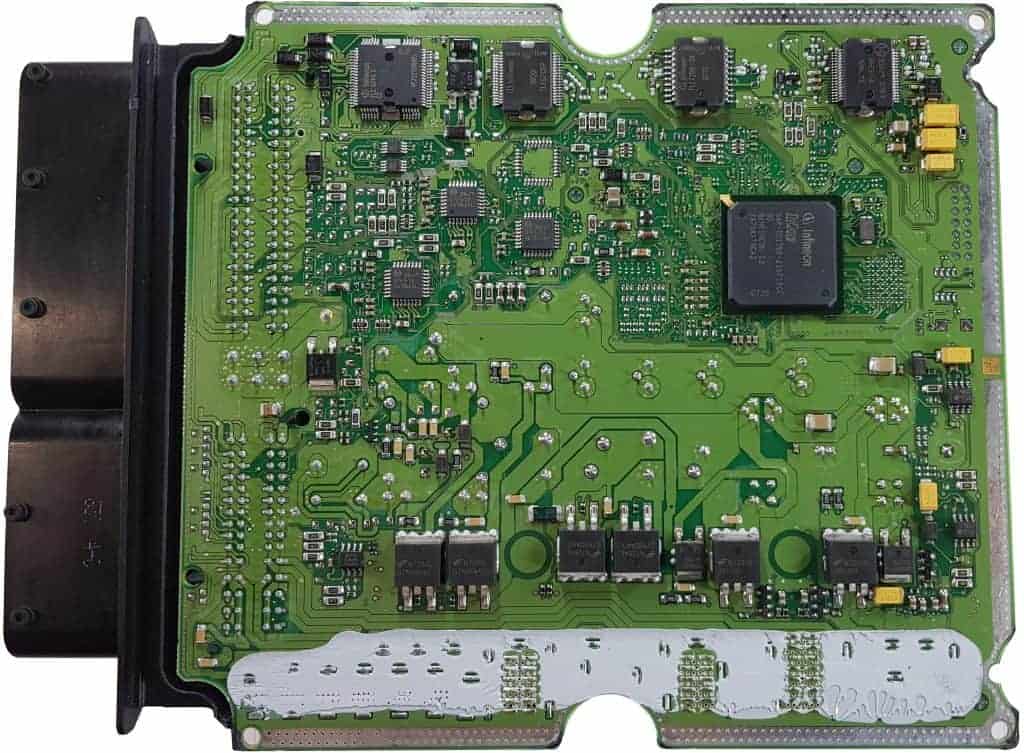
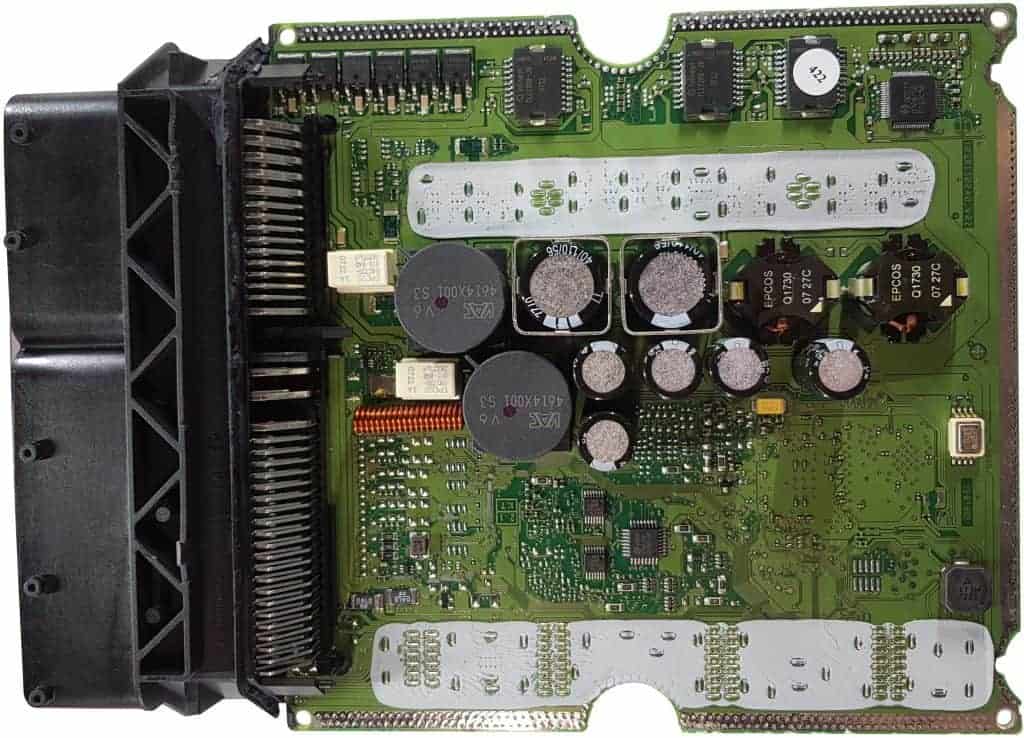
The two images below show the inside of an engine control unit. The covers have been removed. In this paragraph, we use a diagram and the connections to show an example of the circuit of a PWM-controlled valve. First, take a look at the top and bottom side of the PCB.
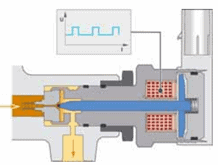
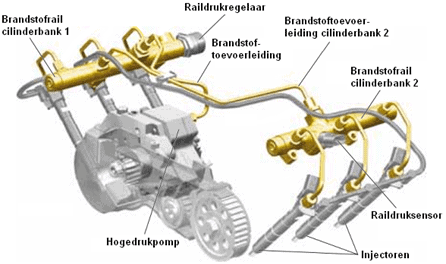
The PWM-controlled pressure regulator is located on the high-pressure line of the common rail. The image below shows the solenoid valve that is opened with a PWM signal. In addition, an overview of the common-rail system can be seen.
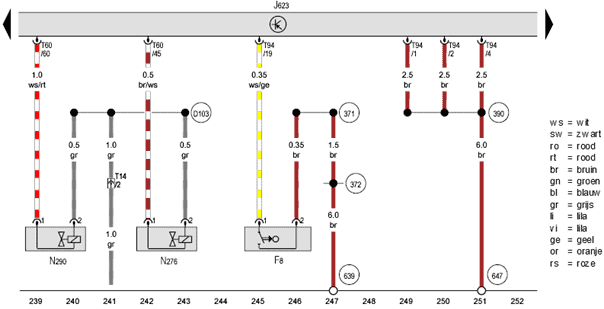
The diagram below is of a 3.0 common-rail diesel engine (VAG). We look up the component code of the fuel pressure regulator: the N276.
This fuel metering valve is intended to regulate the fuel pressure in the rail. In this engine, the pressure varies between 300 and 1600 bar, depending on the operating conditions.
The N276 receives a supply voltage on pin 2 (grey) that is equal to the vehicle system voltage (between 13 and 14.6 volts with the engine running). Pin 1 is connected with a brown/white wire to pin 45 in connector T60 on the ECU.
When the ECU switches the valve to ground, current will flow through the coil. In that case, the valve is energized and opens. If the ECU interrupts the ground, a spring in the fuel metering valve ensures that it closes again. By doing this very rapidly and varying the period of time that the valve opens and closes, we can speak of PWM control.
We will examine the circuit of this PWM control using the diagram below and measurements in the connector and on the ECU PCB. How are the components actually connected? How are they visible on the PCB? And what are the components for? This will become clear in this paragraph.
The image below shows both the inside of the connector and the underside of the PCB. Using multimeter measurements, the solder connection on the PCB to which connector connection T60/45 is connected was traced. These solder points are indicated by the purple arrows.
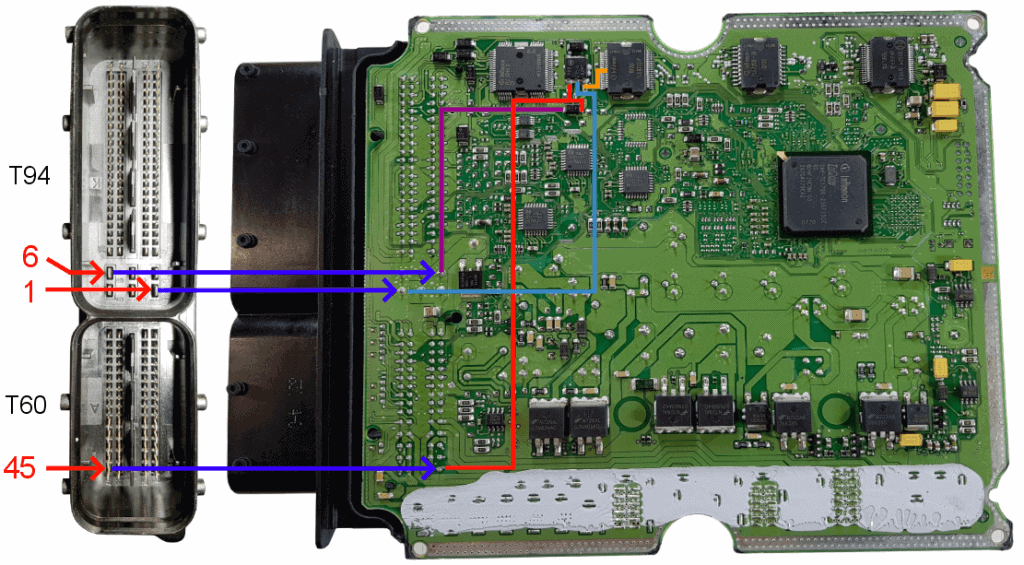
The negative connection of the fuel metering valve (1) is connected via connector connection T60/45 to the drain of the FET and the anode of the freewheel diode. The red lines in the images indicate the solder connections. For clarity, an enlargement of the image above is shown here.
The source is connected to ground via connector connection T94/1 and is indicated by the blue line.
The microprocessor switches the FET on and off by applying a control voltage to the gate of the FET. The orange line shows the connection between the microprocessor and the gate of the FET.
At the moment the gate receives a control voltage from the microprocessor, the FET starts conducting and current can flow from drain to source and thus also through the coil. The magnetic field energizes the coil and closes the fuel pressure control valve.
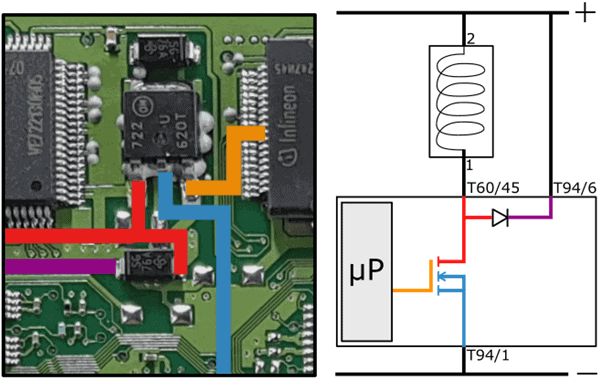
As soon as the control voltage on the gate drops away, the connection between the drain and source is broken. The freewheel diode ensures that the inductive current, as a result of the residual energy in the coil, is routed to the positive. This provides a gradual current decay and prevents an inductive spike from occurring.
The diagram with the fault shows the contact resistance in the positive wire of the coil. The red arrows indicate the direction of current with the FET switched off. Thanks to this circuit, the current can decrease slowly.
Now that we have gone through the circuits and components of the fuel pressure regulator, we can also look at the scope traces when we are dealing with a fault. How do we recognize a fault in a PWM signal? What are the consequences for the operation of the pressure regulator? You can read this on the page duty cyle and PWM control.