Evaporator:
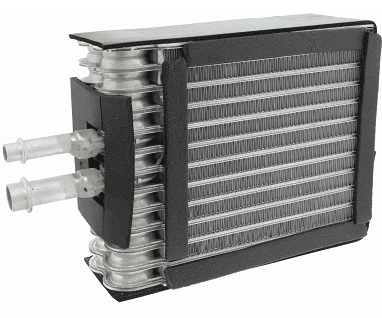
The air that is blown into the interior by the interior fan undergoes a cooling process when the air conditioning is switched on. This cooling process of the air takes place in the evaporator. The evaporator is installed under the dashboard, in the heater housing. It is made up of curved pipes with aluminum heat plates or rows of aluminum tubes.
Gaseous, evaporated refrigerant flows through the evaporator. The evaporator extracts heat and moisture from the air that the interior fan blows through it, or attracts it through the evaporation of the refrigerant. You notice this same effect when you get disinfectant on your skin; it feels cold because of the rapid evaporation of the disinfectant on your skin. A small portion of body heat is transferred to the surrounding air.
The air from the interior fan transfers its heat to the evaporator. The cooled and dehumidified air is then directed by the heater flaps to the correct outlets, through which it reaches the interior.
When the air conditioning is switched off, there is still refrigerant in the evaporator, but it is not being pumped around by the A/C compressor. At that moment the interior fan blows or draws outside air through it. The evaporator then takes on the temperature of the outside air.
Expansion of the refrigerant:
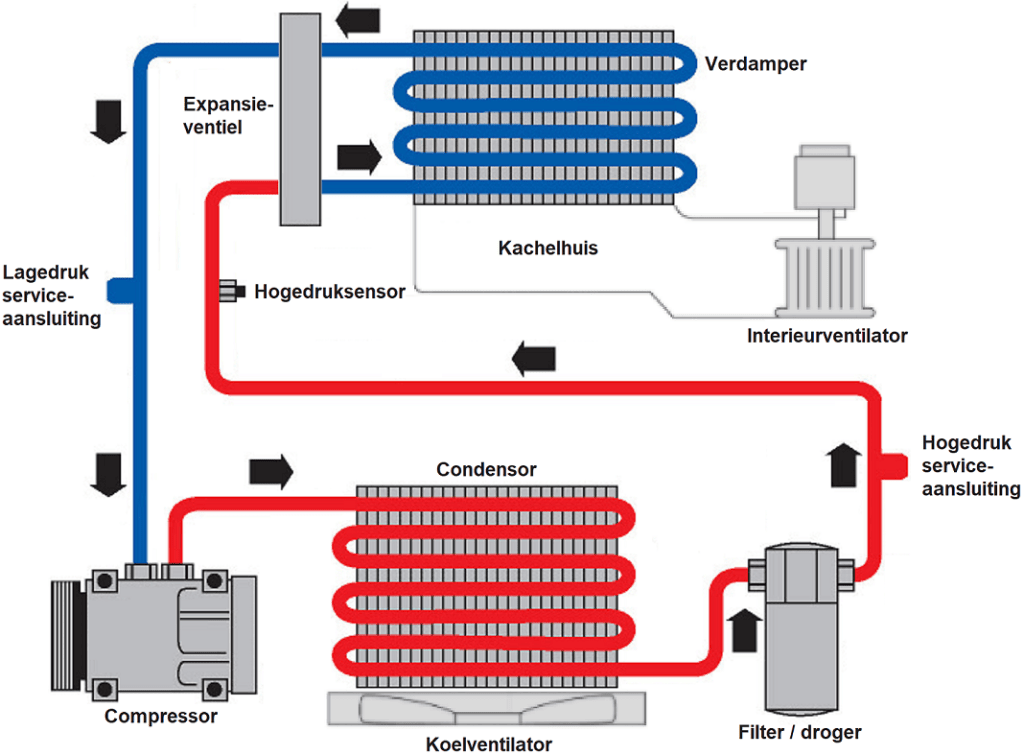
While circulating through the A/C system, the refrigerant passes through different states: liquid, vapor, or a combination of both. These are called aggregate states. In the evaporator, as the name suggests, the refrigerant will evaporate. The evaporation takes place after the expansion. We will look at this in more detail in the next paragraph.
After the refrigerant has passed through the filter/drier element, it reaches the expansion valve with a (high) pressure of about 15 bar and a temperature of about 55 degrees. This valve is mounted directly on the inlet and outlet of the evaporator. In the expansion valve, the transition from high to low pressure takes place. Inside the expansion valve there is a restriction through which the refrigerant is forced. This restriction reduces the pressure of the refrigerant from about 15 bar to 2 bar. This sudden pressure drop results in a lowering of the boiling point of the refrigerant. As a result, the refrigerant changes from liquid to saturated vapor. This means that both vapor and liquid particles are present.
Heat is required for the evaporation of liquid. To enable the transition from liquid to gas, the refrigerant extracts heat from the air flowing through the evaporator. This air cools down and then flows into the interior. This heat causes the liquid particles to turn into vapor.
There are two types of expansion valves: the Thermal Expansion Valve (TEV) and the capillary tube. On the page about the expansion valve, both types are described.
Freezing of the evaporator:
In some cars, the evaporator may freeze. At that moment, no air can flow through the evaporator anymore, so no air is blown through the ventilation grilles. This phenomenon often occurs after prolonged use of the air conditioning. Due to the extremely low temperature of the evaporator and the presence of excessive moisture, the moisture in the evaporator can freeze and cause blockages. A potential cause of this can be a clogged water drain.
In air conditioning systems, moisture is extracted from the outside air, forming condensate on the evaporator that is discharged onto the road through the water drain. That is why you often see a puddle of water under the car when the outside temperature is high and the A/C is switched on.
When the water drain is working correctly, ways can be explored to increase the temperature of the evaporator. In certain cars, this can be controlled electronically using diagnostic equipment in a workshop. For systems with a capillary tube, replacing the expansion device can offer a solution. A capillary with a larger restriction can be installed, resulting in less pressure drop than with a capillary with a smaller restriction. Less pressure drop also results in a less pronounced decrease in refrigerant temperature. This may be sufficient to prevent the evaporator from freezing.
Possible malfunctions and defects:
When an air conditioning system does not function properly, the technician will often first check the pressures in the system. Depending on the fault, the evaporator may be the culprit. These are the most common malfunctions and defects of the evaporator:
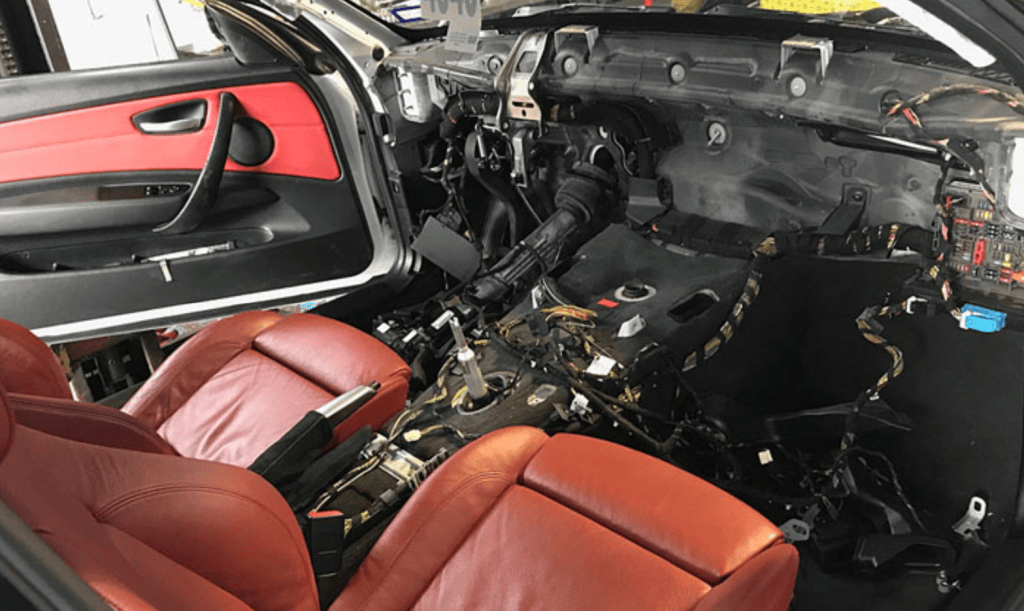
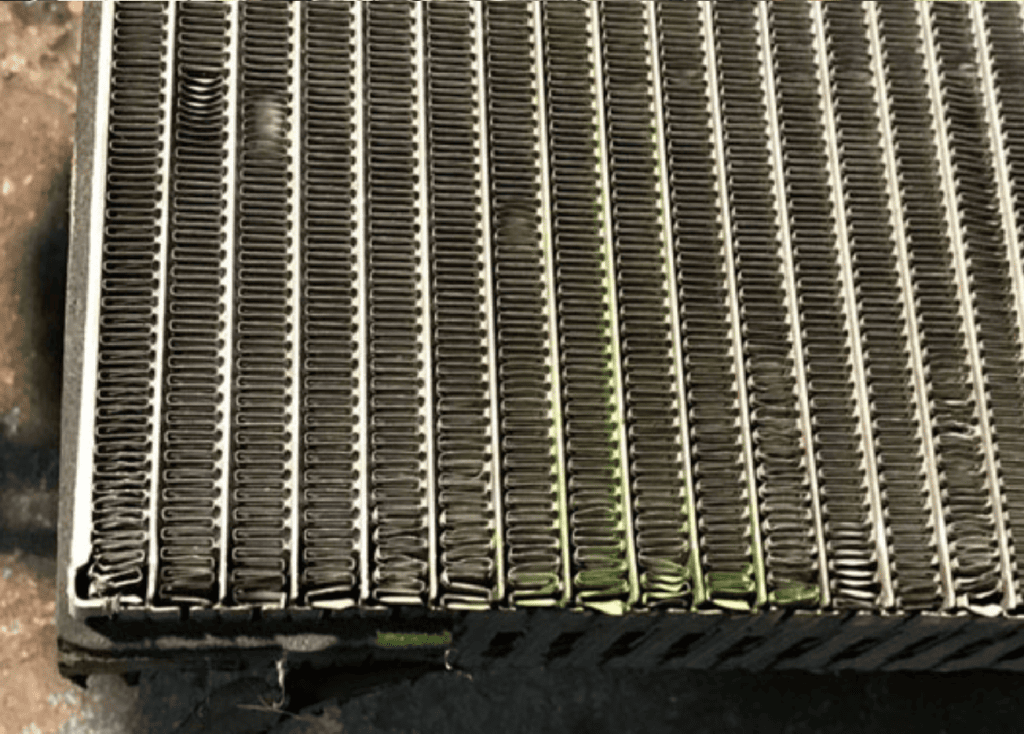
- Leakage: One of the most common issues is leakage. This can be caused by corrosion, expansion and contraction, and thus aging of the material. The evaporator is built into the heater housing behind the dashboard. To remove the evaporator, the entire dashboard and heater housing often need to be disassembled. This is a labor-intensive task. In the image below we can see a removed dashboard and heater housing, with next to it the leaking evaporator from a BMW 1 Series (2012). Leaking refrigerant can reduce the performance of the air conditioning system, eventually resulting in an empty system. When all refrigerant has escaped and the pressures are too low, the compressor will no longer switch on for safety reasons.
When checking for leakage, we use a leak detector. When the system has been filled with a UV additive, yellow/green stains can be seen around the leak. However, the evaporator is often so difficult to access that a visual inspection is not possible. The leak detector must then provide the solution. - Narrowing or blockage: Contamination or deformation of the material can obstruct the airflow through the evaporator. By measuring the pressures and temperatures, we can determine whether this is the case.
Related page: