Production of petrol:
Petrol is obtained from crude oil. Crude oil was formed from small animals and plants that died in the seas centuries ago. These sank to the seabed and were covered with mud and sand over the centuries. This created layers hundreds of metres thick. Under the influence of the enormous pressure of these layers and the seawater, layers of salt, solid and also porous rock were formed. In the porous rock, through bacteriological processes, high temperatures and high pressures, the crude oil was formed from the organic remains. Crude oil is a mixture of hydrocarbons. It consists of 84-87% carbon, 11-14% hydrogen, 3% oxygen, 1% sulphur and 0.5% nitrogen. Through atmospheric distillation in a distillation column, the hydrocarbons with different boiling points are separated from each other. This produces gas, motor petrol, kerosene, diesel oil and fuel oil.
Octane number (RON):
The octane number is indicated with the RON value. It indicates the knock resistance of the petrol. (RON = Research Octane Number). In the Benelux there are two types of petrol for sale: RON (Euro) 95 and RON 98 (Super). In Germany we also find unleaded petrol with octane ratings 91 and 102.
The octane number indicates to what extent petrol is resistant to detonation.
- The lower the number, the higher the ignitability of the petrol.
- The higher the number, the lower the ignitability.
This means that for a car that is suitable for RON 98, only RON 98 may be filled up. When refuelling with RON 95, the mixture ignites earlier than desired. The engine can then start to detonate (ping). The piston then compresses a mixture that has already ignited. The consequences are overheating and the risk of severe engine damage (e.g. a hole in the piston, burnt valves). The other way round is allowed: instead of RON 95 you may fill RON 98. In most cases the engine will not run better or faster on it and it is considerably more expensive. This makes it possible to avoid bio-ethanol containing fuels (E10).

Bio-ethanol (E5 and E10):
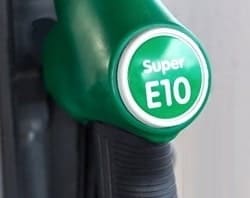
Euro 95 is making way for E10: petrol in which between 7.5 and 10% bio-ethanol is blended. Previously this percentage was a maximum of 5%. The introduction of bio-ethanol is intended to reduce CO2 emissions. With the transition from 5 to 10% bio-ethanol, emissions are reduced by 2 percent. Since 1 October 2019, filling stations with multiple fuel dispensers have been required to offer E10 at at least half of their nozzles. At the filling station this is indicated by the label: Euro 95-E10.
Bio-ethanol contains less energy than petrol. The engine management system compensates for the fuel shortage on the basis of the fuel trims. As a result, more fuel is injected per work cycle and the engine therefore consumes more fuel. Whereas an engine management system corrects the injection quantity itself, engines that are equipped with a carburettor run into problems: the carburettor does not compensate the mixture.
An engine with a carburettor may therefore start to run lean. Heat development and fuel consumption increase even more. In addition, there is an increased risk of contamination and defects. We will come back to this later in this paragraph.
Another characteristic of bio-ethanol is its knock resistance: E10 has, due to the blending of bio-ethanol, an octane number of 98.9.
From the moment ethanol was mixed with petrol, various problems arose, which have only increased with the introduction of E10. The problems with bio-ethanol arise on the one hand because current engine components cannot cope with it very well, and on the other hand because of its shelf life and the fact that ethanol attracts water.
This means that contamination, sludge formation and varnish formation can occur throughout the entire fuel system. Below is a list of the most common problems:
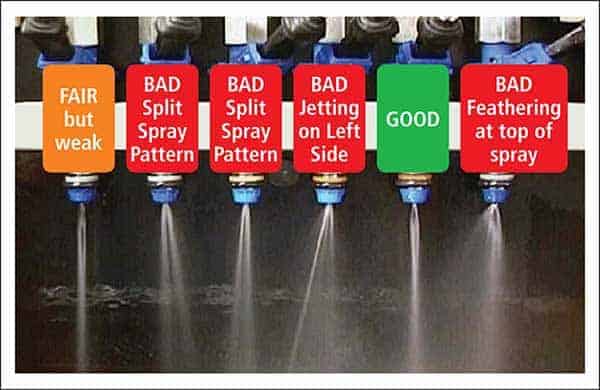
- on all vehicles (including those for which E10 is a prescribed fuel) and motorised lawn mowers, chainsaws etc. that are used again after standing still for a long time, e.g. after winter storage, injection problems may occur due to corrosion caused by the ethanol, damage to rubber and plastic parts and clogged injectors.
- petrol engines that develop starting problems, such as extended cranking before the engine starts, may be suffering from bio-ethanol. In most cases, filling up with a premium fuel (RON 98 E5) already makes a difference after one tankful.
- certain engines where components are not resistant to bio-ethanol are guaranteed to develop fuel problems after a short period of time. See the website: https://www.e10check.nl.