Measuring valve guide clearance:
Worn valve guides can result in the following complaints and defects:
- burnt valve heads;
- broken valve;
- wear of the valve rocker arm;
- increased oil consumption.
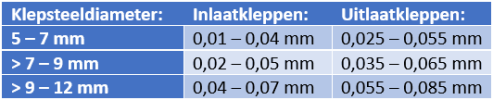
With the cylinder head removed, we want to measure the clearance between the valve stem and the valve guides in case of the above complaints. Not all manufacturers specify the maximum permissible clearance in the service documents. In that case, we can use the reference values in the table below:
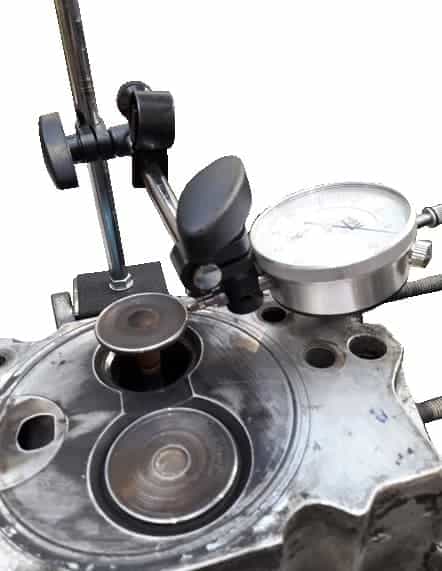
The following image shows the measurement where the valve guide clearance of the exhaust valve is measured. The dial gauge is placed on a stand, thus obtaining a fixed position. We place the stylus of the dial gauge, with a preload of at least 2 mm, against the valve head of the valve, which is pushed out of the cylinder head by approximately 10 mm.
With moderate force we try to move the valve back and forth in the direction of the dial gauge. The pointer of the dial gauge will move back and forth over a certain range of the dial during this movement. The stroke made by the pointer indicates the clearance.
Replacing valve guides:
When we measure excessive clearance between the valve guide and the valve stem, we consult the technical data of the respective engine to find out whether the valve guides can and may be replaced. If this is not possible according to the factory specifications, a reputable reconditioning company will often know how to deal with this. Otherwise it would mean that the complete cylinder head would have to be replaced.
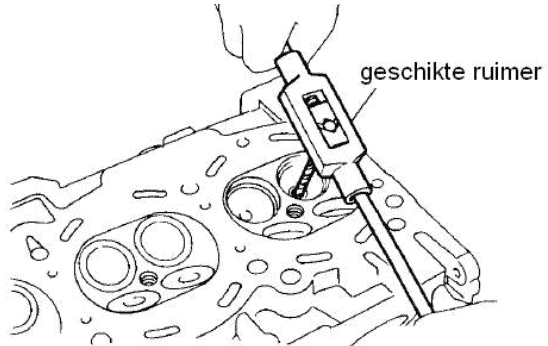
If it is possible to replace the valve guides, special equipment is required to remove the valve guides, ream the bore and install new valve guides. In most cases the cylinder head must be heated to well above 100 degrees Celsius and the valve guides must be pressed into the bores.
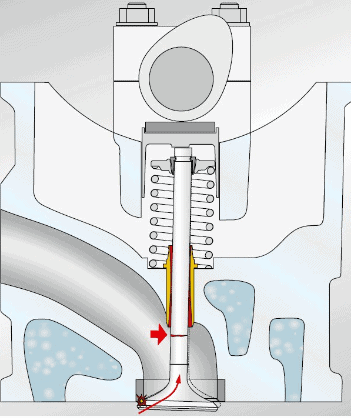
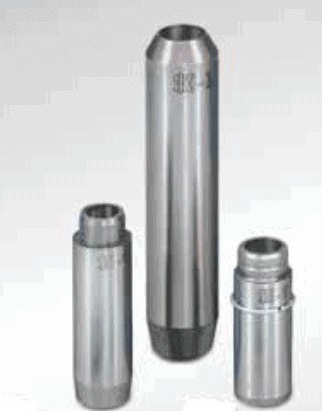
The two images below show the position of the valve guide in the cylinder head (left) and three different valve guides (right).
Related pages: