Inventor:
The spark plug was invented in 1903 by Dr. Robert Bosch. The spark plug is one of the most important components of the ignition system of a petrol or gas engine. Bougie is the French word for candle.
Operation:
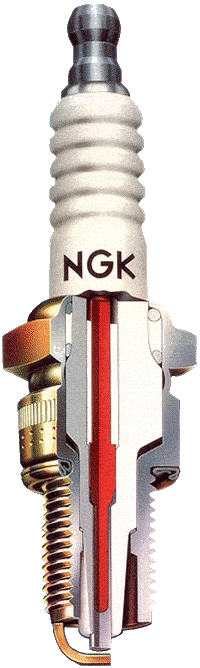
To create an ignition, a high voltage is generated which is boosted by the ignition coil up to 30,000 volts and sent via the spark plug lead to the spark plug. When the voltage reaches the spark plug, it is conducted via the central or center electrode to the lower part of the spark plug, where the plug is located in the combustion chamber. The center electrode is a long pin made of special material (usually copper so that the heat can be dissipated properly). The end of the spark plug that protrudes into the combustion chamber is exposed to high temperatures (up to 900 degrees Celsius). Therefore the tip must be made of a heat-resistant material. The spark that is generated in the plug jumps across between two electrodes. The spark plug must never be knocked against anything or dropped, because this can damage the ceramic insulator and change the electrode gap. The ceramic insulator is fitted around the central electrode (the white part by which the plug is held) to ensure that the spark occurs between the two electrodes. If that does not happen, the high voltage or the spark can leak away. In that case the spark plug is defective and must be replaced.
A spark plug consists of 3 parts:
- Porcelain insulator
- Central / center electrode
- Metal spark plug body with a thread and a hexagon, to which one or more ground electrodes are attached.
Heat rating:
It is important that the center electrode has the correct temperature. If the temperature is too low, the spark plug will foul and the spark will not jump as well. The temperature must also not become too high, because then it will start to glow and ignite the mixture before the spark occurs.
Characteristics of a used spark plug:
A used spark plug can tell you the following things about the engine: oil consumption, temperature, timing and operation of the ignition, and fuel usage.
- Coffee-brown (with milk) is good.
- Soot deposits indicate too low compression pressure, poorly functioning ignition, or too much petrol.
- When they are wet and smell of petrol, the engine does not have correct ignition or the injection quantity is incorrect (so a defective ignition coil or injector).
- Oil deposits indicate oil consumption in the combustion chamber.
- White insulator (in the middle of the plug around the electrode): the plugs are getting too hot.
- With a hard, dry deposit, either the engine or the spark plug is not reaching operating temperature. It may be that a plug with an incorrect heat rating has been fitted.
Spark plug leads:
Spark plug leads provide the current transfer from the distributor cap or the (DIS) coil to the spark plugs and must not be interchanged. If an engine will not start on a wet morning, or the engine runs roughly in damp weather, then damp (leaking) spark plug leads may be the cause.
More information about the type of ignition system or the control of the coil by the ECU can be found on the ignition system page.