Hydrogen:
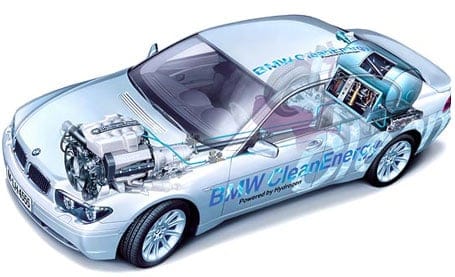
Hydrogen (in English called hydrogen) can be used as an energy carrier for powering vehicles. Energy carrier means that energy has already been put into the hydrogen beforehand. That is in contrast to (fossil) energy sources such as crude oil, natural gas and coal, where the energy is obtained by processing these substances by burning them.
Hydrogen is therefore something completely different from water injection, which in petrol engines is not used as an energy carrier, but purely for cooling the combustion chamber.
With hydrogen, the aim is to achieve “zero emission”; a form of energy where no harmful gases are produced during use. The transition from fossil fuels to electric drive in combination with hydrogen and a fuel cell falls under the energy transition. Powering vehicles with hydrogen can be done in two different ways:
- Using hydrogen as fuel for the Otto engine. The hydrogen replaces the petrol fuel.
- Using hydrogen in a fuel cell to generate electrical energy. With this electrical energy, the electric motor will drive the vehicle fully electrically.
On this page, both techniques are described.
Hydrogen can be produced with renewable energy or from fossil fuels. We try to avoid the latter as much as possible, because fossil fuels will become scarce in the future. Processing fossil fuels will also produce CO2.
The columns below show the energy content of a battery, hydrogen and petrol. In these we see that there is veek
Battery:
- Energy content: 220Wh/kg, 360 Wh/l
- Highly efficient
- Short-term storage
- Direct energy delivery possible
- Transport is complex
Hydrogen (700 bar):
- Energy content: 125,000 kJ/kg, 34.72 kWh/kg
- 30% heat, 70% H2 (PEM fuel cell)
- Long-term storage possible
- Conversion necessary
- Transport-friendly
Petrol:
- Energy value: 43,000 kJ/kg, 11.94 kWh/kh
- Efficiency up to 33%
- Long-term storage possible
- Conversion necessary (combustion)
- Transport-friendly
Hydrogen is present all around us, but never in free form. It is always bound. We are going to produce, isolate and store it.
- 1 kg of pure hydrogen (H2) gas = 11,200 litres at atmospheric pressure
- H2 is smaller than any other molecule
- H2 is lighter than any other molecule
- H2 is always seeking bonds
This page not only covers the production and use of hydrogen in passenger cars, but also the storage and transport (at the bottom of the page).
Production of hydrogen:
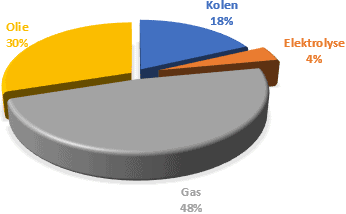
Hydrogen is a gas that, unlike natural gas, is not extracted from the ground. Hydrogen must be produced. This is done, among other things, via electrolysis, a process in which water is converted into hydrogen and oxygen. That is the reverse of the reaction that takes place in a fuel cell. In addition, hydrogen can be obtained via less environmentally friendly processes. In the data below we can see how hydrogen can be produced as of 2021.
- Coal: C + H20 -> CO2 + H2 + Nox + SO2 + … (temp: 1300C-1500C)
- Natural gas: CH4 + H2O -> CO2 + 3H2 (required temp: 700C-1100C)
- Oil: CxHyNzOaSb + …. -> cH2 + very many by-products
- Electrolysis from water: 2H2O -> 2H2 + O2
Electrolysis from water is very clean and is the most environmentally friendly form of hydrogen production. Here, hydrogen and oxygen are released, in contrast to processing fossil fuels, where CO2 is released.
- Electrolysis of water; Electrolysis is a chemical reaction in which water molecules are split to create pure hydrogen and oxygen. Hydrogen can be produced anywhere there is water and electricity. A disadvantage is that you need electricity to make hydrogen and then turn it back into electricity. Up to 50% is lost in this process. The advantage is that the energy is stored in the hydrogen.
- Conversion of fossil fuels; oil and gas contain hydrocarbon molecules consisting of carbon and hydrogen. With a so-called fuel processor, hydrogen can be separated from the carbon. The disadvantage is that the carbon ends up in the air as carbon dioxide.
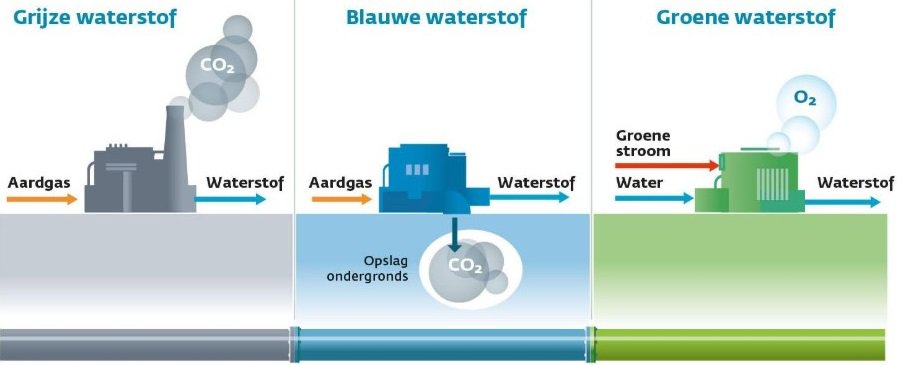
The hydrogen production obtained from fossil fuel is called grey hydrogen. In this process, among other things, NOx and CO2 end up in the atmosphere.
From 2020 onwards, production is increasingly taking place in a “blue” way: CO2 is captured.
The goal is to produce only green hydrogen by 2030: green electricity and water are the sources for the most environmentally friendly hydrogen production.
In the world of chemistry, hydrogen is denoted by H2, which means that a hydrogen molecule is made up of two hydrogen atoms. H2 is a gas that does not occur in free form in nature. The H2 molecule occurs in all kinds of substances, the best-known being water (H2O). Hydrogen must be obtained by separating the hydrogen molecule from, for example, a water molecule.
The production of hydrogen by means of electrolysis is therefore the future.
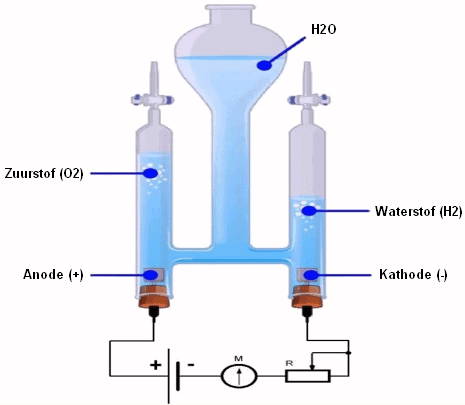
The following image shows a model that is often used in chemistry lessons.
- The positive and negative terminals of a battery hang in the water;
- On the anode side you get oxygen;
- On the cathode side you get hydrogen.
Hydrogen produced from fossil fuel, for example methane (CH4), is in this case converted into H2 and CO2 by reforming. The CO2 can be separated and stored underground, for example in a depleted natural gas field. In this way, the use of natural gas contributes little or nothing to CO2 emissions to the atmosphere. Hydrogen can also be made from biomass. If the CO2 released in this process is also separated and stored underground, it is even possible to achieve negative CO2 emissions; removing CO2 from the atmosphere and storing this CO2 on earth.
Hydrogen is, unlike fossil fuels such as crude oil, natural gas and coal, not an energy source, but an energy carrier. This means that the energy released when using the hydrogen, for example as fuel in a car, must first have been put into it. For the production of hydrogen by means of electrolysis, electricity is needed. The sustainability of this hydrogen then largely depends on the sustainability of the electricity used.
Hydrogen as fuel for an Otto engine:
An Otto engine is another term for a petrol engine. The petrol engine was invented in 1876 by Nikolaus Otto. In this case we call it an Otto engine because the petrol is replaced by another fuel, namely hydrogen. In an engine where hydrogen is injected, there is therefore no longer a fuel tank with petrol.
When hydrogen is burned, no CO2 gases are produced, unlike in conventional Otto and diesel engines, but only water. When hydrogen is injected by direct injection, there will be a power increase of 15 to 17% compared to petrol fuel. When the hydrogen is injected onto the intake valve (with indirect injection), rapid heating by the air takes place. In addition, the air is displaced by the hydrogen. In both cases, less oxygen (O2) flows into the combustion chamber. In the worst case, a power loss of up to 50% occurs.
The air-hydrogen ratio is less critical than, for example, an air-petrol mixture. The shape of the combustion chamber is therefore not very important either.
Hydrogen can be injected in two ways:
– Liquid: With liquid hydrogen supply, the combustion temperature will drop relatively due to evaporation, resulting in less NOx.
– Gaseous: When the hydrogen is stored in liquid form in the tank and flows into the combustion chamber at ambient temperature, an evaporator must be used to convert the hydrogen from liquid to gaseous state. In that case, the evaporator is heated by the engine coolant. Possible measures to reduce NOx are the use of EGR, water injection or a lower compression ratio.
In the image below, four situations are shown with three different versions of hydrogen injection. In the second image from the left, gaseous hydrogen is injected indirectly into the intake manifold. The gaseous hydrogen is heated by the ambient temperature. The hydrogen also takes up space, so that less oxygen can flow into the cylinder. This is the situation in which the greatest power loss occurs.
In the third image, the hydrogen is supplied in liquid form. Cryogenic means that the hydrogen is cooled to a very low temperature (a method for storing large quantities of hydrogen in liquid form in a relatively small storage tank). Because the temperature of the hydrogen is lower and it is in liquid state, cylinder filling is improved. Due to the low temperature, an efficiency almost as high as that of an engine with direct (hydrogen) injection is achieved. The engine with direct injection can be seen in the fourth image. The entire combustion chamber is filled with oxygen. When the intake valve is closed and the piston is compressing the air, a certain amount of hydrogen is injected by the injector. In this engine, the spark plug is located behind or next to the injector (it is not visible in the image).
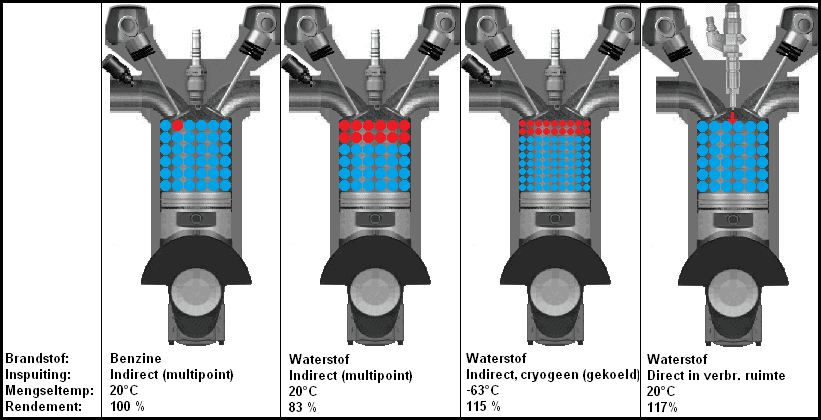
The efficiency of an Otto engine is of course not 100%, but in this image the efficiencies of burning hydrogen are compared with burning petrol.
Hydrogen has a high energy density per unit of mass (120MJ/kg) and is therefore almost three times as high as petrol. The good ignitability of hydrogen makes it possible to run the engine very lean, with a lambda value of 4 to 5. The disadvantage of using a lean mixture is that power will be lower and drivability will be reduced. To compensate for this, boost pressure (a turbo) is often used.
Due to the larger ignition range compared to petrol fuel, the risk of detonation or backfire is greater. It is therefore very important to have good control of the fuel supply and ignition. At full load, the temperature in the combustion chamber can become very high. Water injection is often needed to provide sufficient cooling and thus prevent premature ignition (in the form of detonation or backfire).
Fuel cell:
In the previous paragraph it was explained how hydrogen can serve as fuel for the internal combustion engine. Another application of hydrogen is in the fuel cell. A vehicle equipped with a fuel cell does not have an internal combustion engine but one or more electric motors. The electrical energy to run the electric motors is produced by the fuel cell. A fuel cell is an electrochemical device that converts chemical energy directly into electrical energy, without thermal or mechanical losses occurring. The energy conversion in the fuel cell is therefore very efficient. In general, the fuel cell runs on hydrogen, but a fuel such as methanol can also be used for this.
A fuel cell can in principle be compared to a battery, because both produce electricity by means of a chemical process. The difference is that the stored energy in the battery is released once. The energy is depleted over time, after which the battery has to be recharged. A fuel cell supplies continuous energy as long as reactants are supplied to the electrochemical cell. Reactants are chemical substances that react with each other in a chemical reaction.
In a fuel cell, hydrogen and oxygen are converted into H+ and OH- ions (particles that are charged). The ions are separated in separate chambers of the fuel cell by a membrane. The fuel cell contains two porous carbon electrodes on which a catalyst is applied; at the hydrogen (H) a negative electrode (anode) and at oxygen (O) a positive electrode (cathode).
H+ and OH- ions are guided towards each other via the electrodes (anode and cathode), after which the + and – ions react with each other. The cathode catalyses the reaction in which the electrons and protons react with oxygen to produce the final product, namely water. The H+ and OH- ions together form an H2O molecule. This molecule is not an ion because the electric charge is neutral. The plus particle and the minus particle together form a neutral particle.
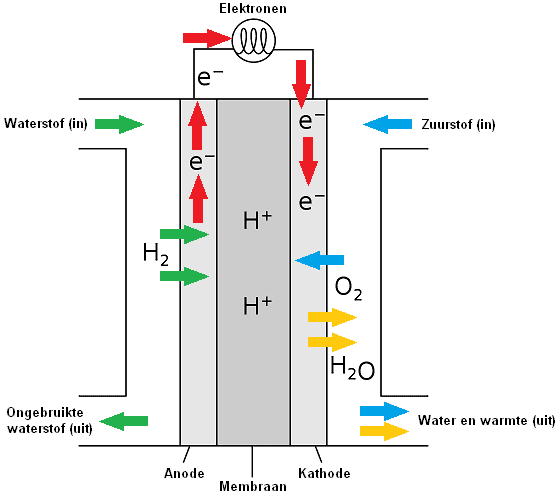
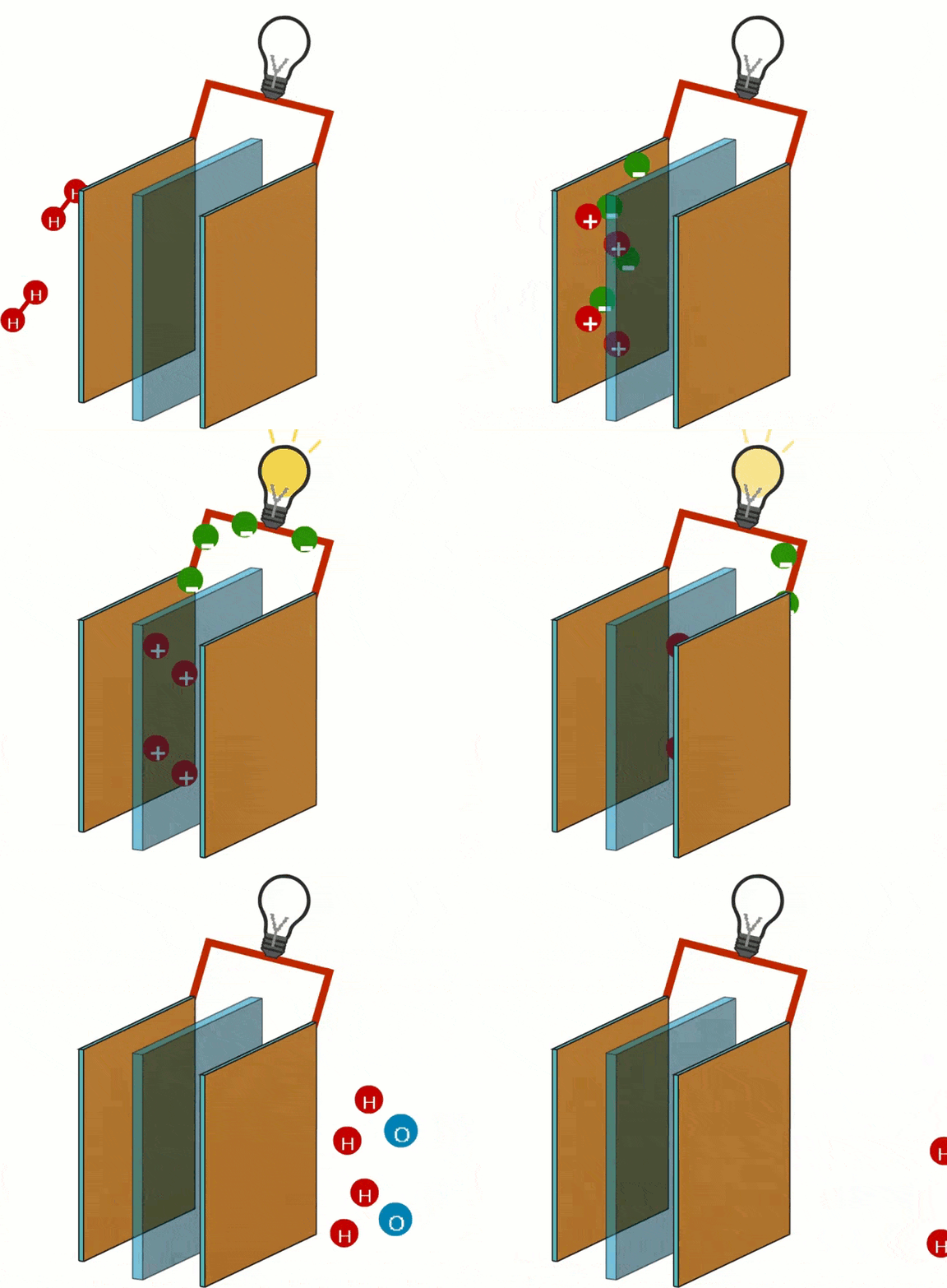
At the anode, oxidation of the hydrogen (H) takes place. Oxidation is the process in which a molecule gives up its electrons. The anode acts as a catalyst, causing the hydrogen to be split into protons and electrons.
At the cathode, reduction takes place by adding oxygen (O). The electrons, blocked off by the anode, travel via an electrical wire that connects the electrodes externally to the cathode.
By allowing the transfer of electrons to take place not directly, but via an external path (the power wire), this energy is largely released as electrical energy. The circuit is closed by ions in a connecting electrolyte between the reductant and oxidant.
The particle that accepts electrons is called an oxidant and is thereby reduced. The reductant gives off electrons and is oxidised. A reduction is the process in which a particle accepts electrons. Oxidation and reduction always occur together. The number of electrons given off and accepted is always equal.
The following reaction takes place at the negative terminal:

A different reaction takes place at the positive terminal, namely:

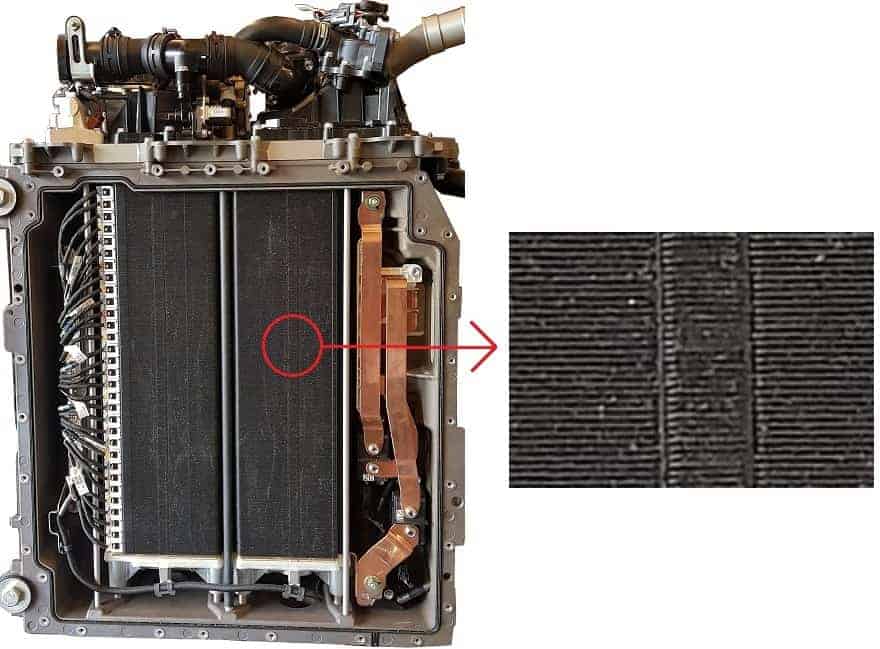
In the image below, the underside of a fuel cell stack from a Toyota can be seen. This fuel cell stack is located under the bonnet of the car. The electric motor is attached to this stack. The electric motor supplies power to the transmission, which is connected to the drive shafts to transmit the drive forces to the wheels.
On the top of the stack, various air ducts can be seen. These contain, among other things, the air pump that pumps the air to the fuel cells, depending on the power demanded by the electric motor.
This fuel cell stack is equipped with 370 fuel cells. Each fuel cell supplies 1 volt, so a total of 370 volts can be supplied to the electric motor. The fuel cells are all located one on top of the other. The red circle shows a magnification, where the stack of fuel cells is clearly visible.
Storage tank:
Although hydrogen has a high energy density per unit of mass (120MJ/kg) and is therefore almost three times as high as petrol, its lower specific mass means that the energy density per unit of volume is very low. For storage, this means that the hydrogen must be stored under pressure or in liquid form in order to use a storage tank of manageable volume. For vehicle applications, there are two variants:
- Gaseous storage at 350 or 700 bar; at 350 bar the tank volume in terms of energy content is a factor of 10 larger than with petrol.
- Liquid storage at a temperature of -253 degrees (cryogenic storage), in which case the tank volume in terms of energy content is a factor of 4 larger than with petrol. With gaseous storage, hydrogen can be stored indefinitely without fuel loss or loss of quality. With cryogenic storage, however, vapour formation occurs. Because the pressure in the tank increases due to warming, hydrogen will escape through the pressure relief valve; a leakage of around two percent per day is acceptable. Alternative storage options are still in the research stage.
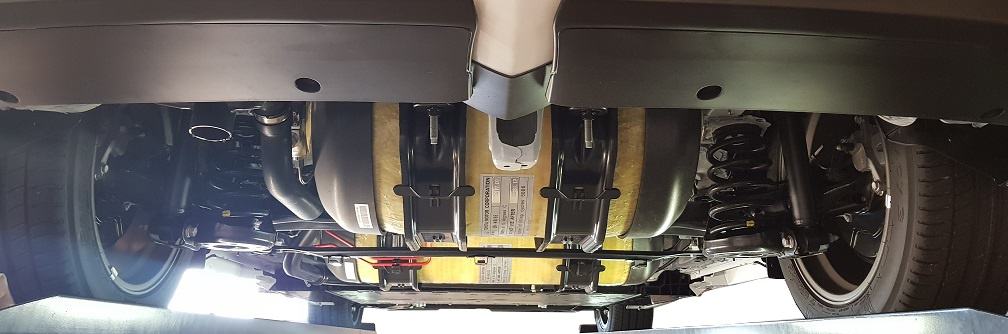
In the image below, two storage tanks can be seen under the car. These are storage tanks in which the hydrogen is stored in gaseous form at a pressure of 700 bar. These storage tanks have a wall thickness of approximately 40 millimetres (4 centimetres), making them resistant to the high pressure.
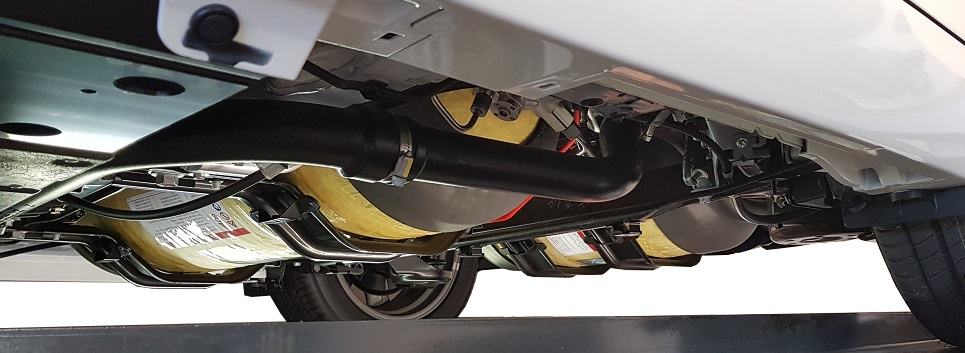
Below you can again see how the hydrogen tanks are mounted under the car. The plastic pipe is the drain for the water produced during the conversion in the fuel cell.
Refueling hydrogen:
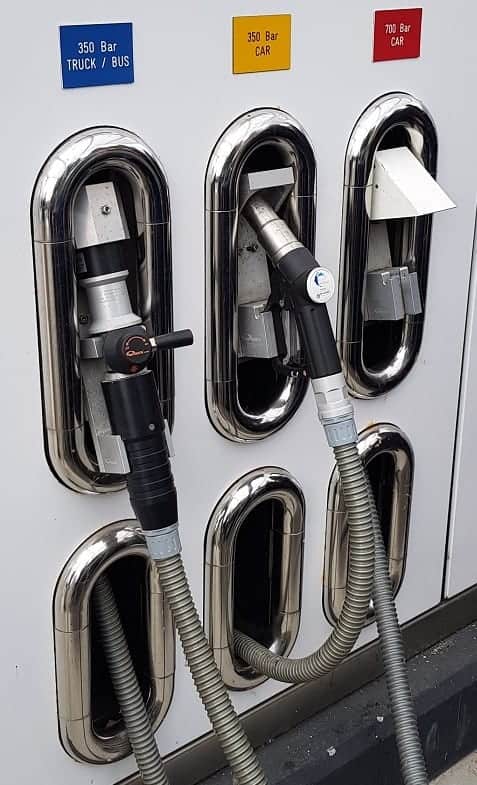
In the Netherlands, at the time of writing this article, there are only two hydrogen filling stations. One of these filling stations is located in Rhoon (South Holland). In the images, the filling nozzles used for refueling can be seen. The operating pressure during refueling is 350 bar for, among others, commercial vehicles and 700 bar for passenger cars.
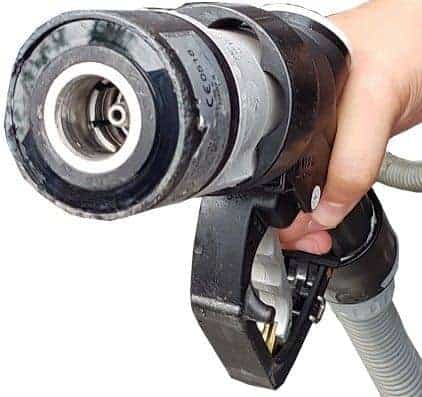
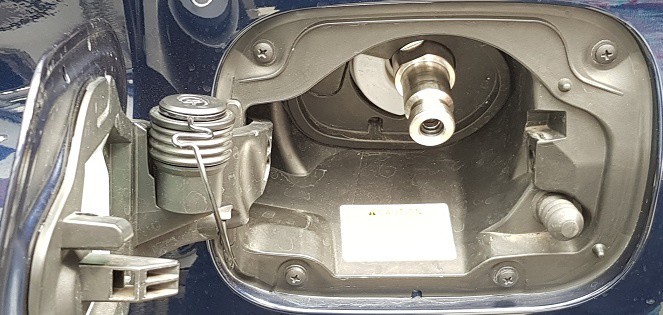
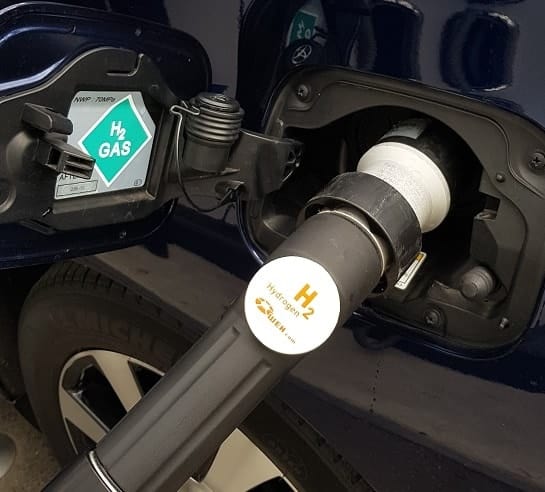
The filling connection on the car is located behind the usual fuel flap. The filling nozzle is connected to this filling connection. After connecting the filling nozzle, the connection will lock. The storage tank of the car will be filled with gaseous hydrogen at a pressure of 700 bar.
Range and costs of hydrogen
As an example, we take a Toyota Mirai (model year 2021) and look at the range and the associated costs:
- Range of 650 km;
- Consumption: 0.84 kg / 100 km;
- Fuel price per km: 0.09 to 13 euro cents;
- Road tax €0,-
Compared with a vehicle with a diesel engine, a fuel cell car is not cheap. The costs of the road tax certainly play a major role, however the number of filling stations in the Netherlands in 2021 is still limited. Below is a comparison of the costs per 100 km using the current fuel prices:
BMW 320d (2012)
- Diesel: €1.30 per liter;
- Consumption: 5.8 l/100 km;
- Costs per 100 km: €7.54.
Toyota Mirai (2020):
- Hydrogen: €10 per kg;
- Consumption: 0.84 kg/100 km;
- Costs per 100 km: €8.40
Related pages:
- Electric drive (overview);
- Energy transition.