Topic:
Radiator:
The radiator’s task is to transfer the high temperature of the coolant to the (cooler) passing air. The engine then receives the cooled coolant again, preventing it from overheating.
The radiator is mounted behind the car’s front bumper. Often a condenser (for the air conditioning), a heat exchanger (for the automatic transmission fluid) and an intercooler (on cars with a turbo / supercharger) are also mounted in front of the radiator.
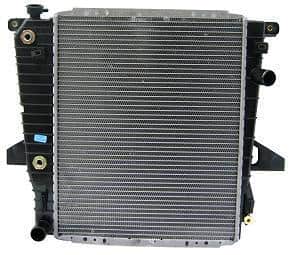
The coolant flows via the coolant channels of the engine through flexible hoses to the top of the radiator. The coolant then follows a zigzagging horizontal path from the top to the bottom of the radiator. This is called a “cross-flow radiator”. When the coolant would flow from top to bottom through the radiator, we would call it a “down-flow radiator”.
Between the coolant tubes of both the cross-flow and the down-flow radiator are small fins. Both the coolant tubes and the fins are heated by the warm coolant. The radiator is made of thin aluminum, which has the advantage that it heats up and cools down very quickly.
When the car is driving on the road, the driving wind flows between the fins. The heat of the coolant is transferred to the cooler air. As a result, the coolant can cool down by tens of degrees.
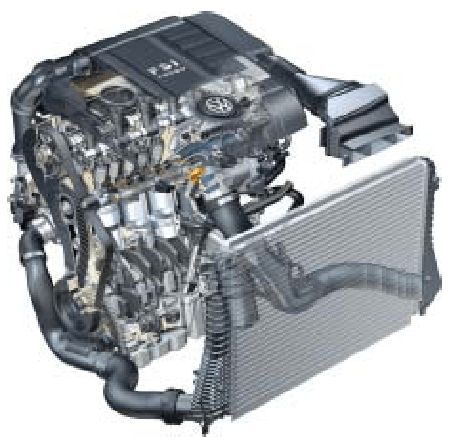
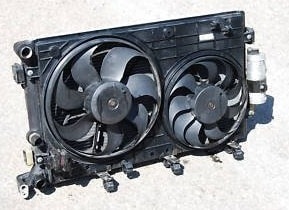
When the car is stationary and there is no driving wind, the electric or viscous fan provides airflow through the radiator. On some cars, the electric cooling fan is mounted in front of the radiator (between the front bumper and radiator, pushing the air through the radiator towards the engine bay), and on other cars the electric fan or viscous fan is mounted between the radiator and the engine block, drawing the air through the radiator.