Topics:
- Introduction
- Standard fuse
- Mini fuse
- Maxi fuse
- Cartridge fuse
Introduction:
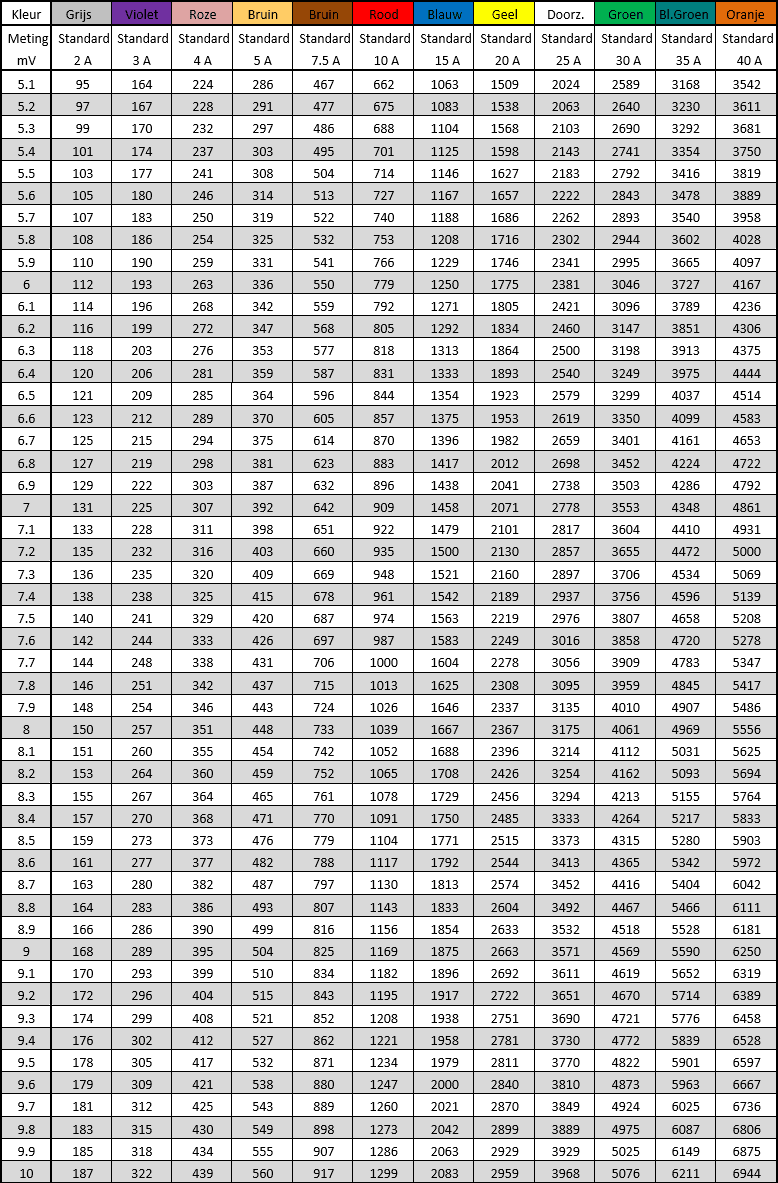
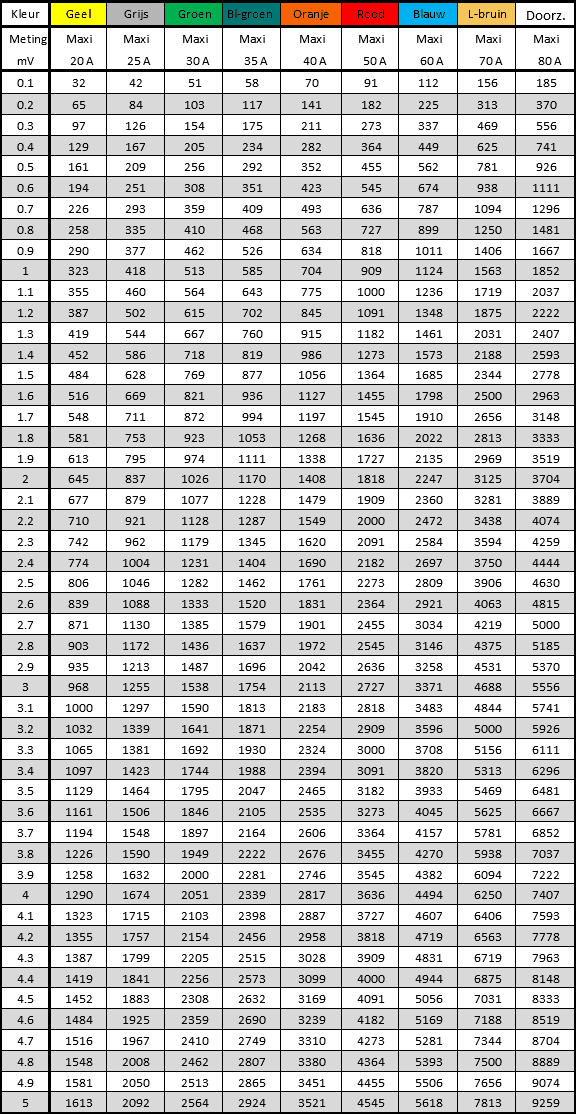
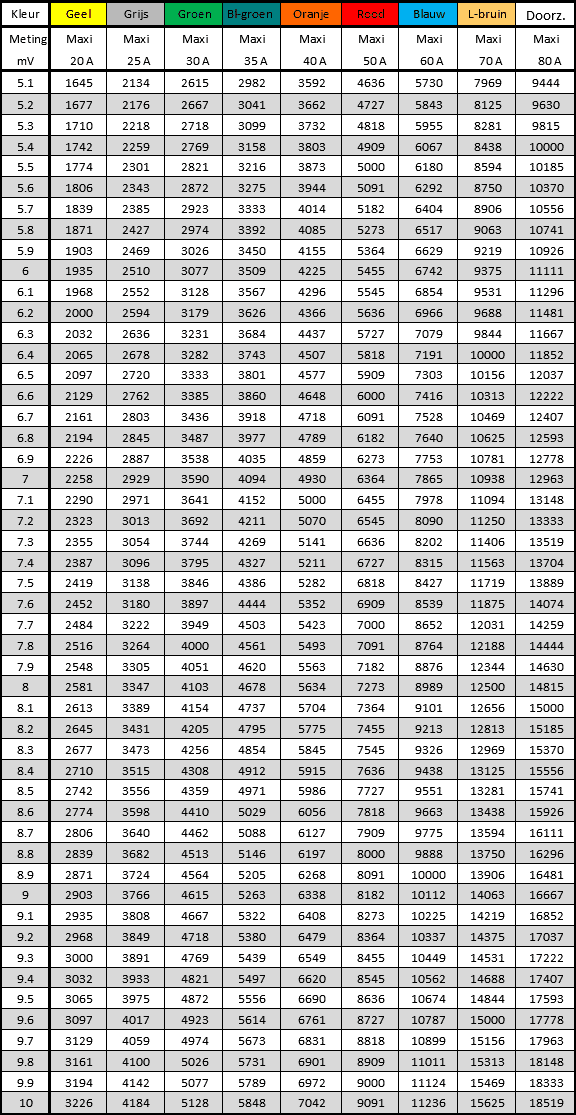
When making a diagnosis, it can be useful to check the voltage drop across the fuses. The current flowing through the fuse influences the voltage difference at the fuse contact surfaces, because the fuse behaves like a (small) resistor. Due to this resistance, a voltage loss occurs as soon as current flows through it. The higher the current, the higher the voltage loss. We can therefore use the magnitude of the voltage difference (= voltage drop) across the fuse in the diagnosis. In the connected condition we can check, by measuring the voltage drop, whether current is flowing through the fuse. Depending on the type of fuse and its rated value, we can look up the current in tables. These tables are shown on this page.
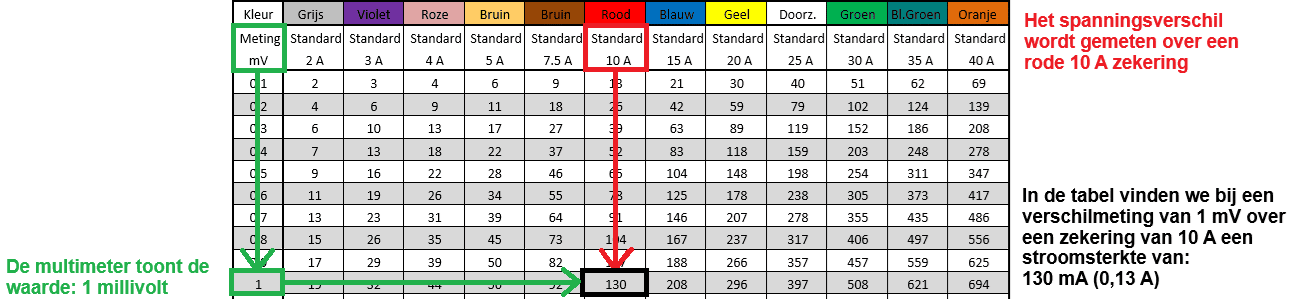
Explanation of how to read the tables:
After measuring the voltage difference across a fuse, we can use the table to look up how much current is flowing through it.
- Measured voltage difference: 1 mV (0.001 V)
- Type of fuse: ATO, red, 10 A
- Current through the fuse: 130 mA (0.130 A)
Standard fuse:
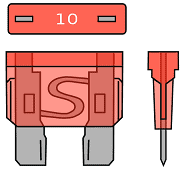
In passenger cars we usually find blade fuses in the “mini” and “normal”, in other words the standard sizes. The standard blade fuse has the code “ATO”. An example of this can be seen in the following image. Here you can see the side, top, and front views of a red 10 ampere fuse.
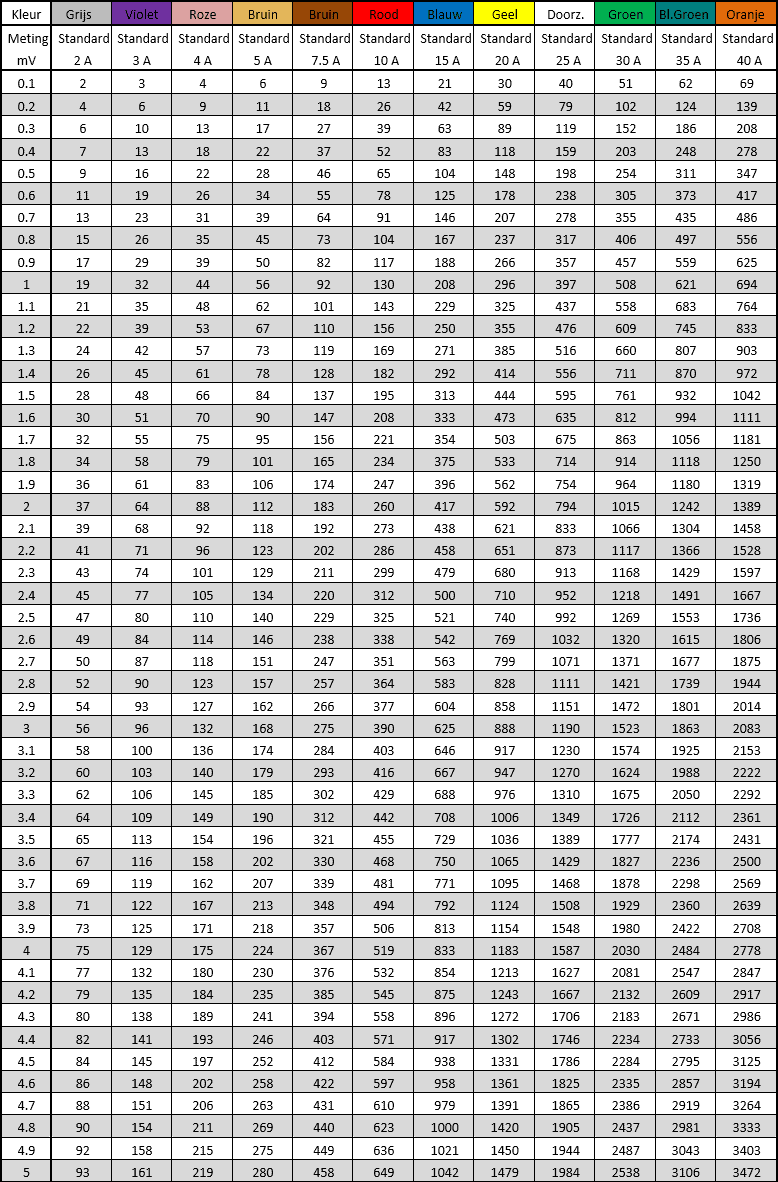
The tables below show the voltage drop across the fuse. The voltage drop indicates how much voltage is absorbed in the fuse. The voltage drop depends on the current through the fuse and the blow rating.
Mini fuse:
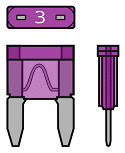
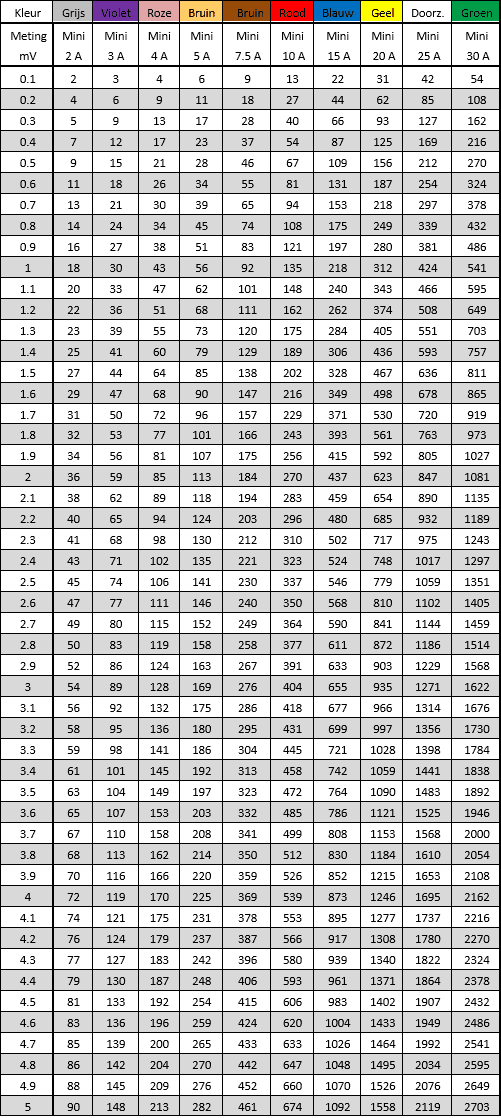
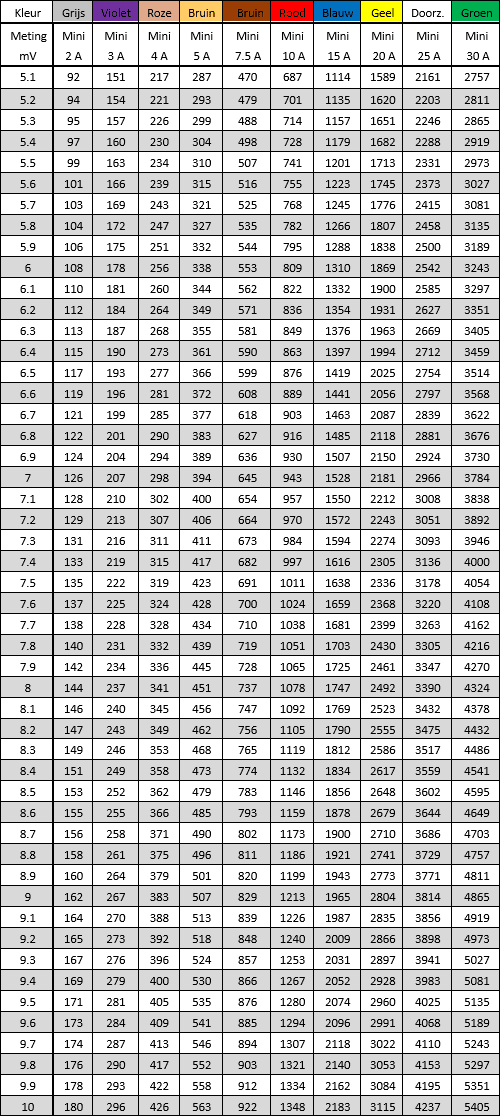
In addition to the normal ones, we also find mini blade fuses in the fuse boxes of passenger cars. As the name suggests, the mini fuse is a smaller version of the normal fuse. An example of this can be seen in the following image: this is a violet fuse with a blow rating of 3 amperes.
The two tables below show the voltage drop across the different fuses at increasing current.
Maxi fuse:
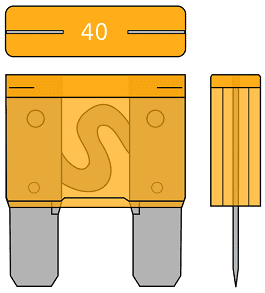
The maxi fuse is the largest type of blade fuse that we find in passenger cars. This type of fuse is suitable for high power.
Cartridge fuse:
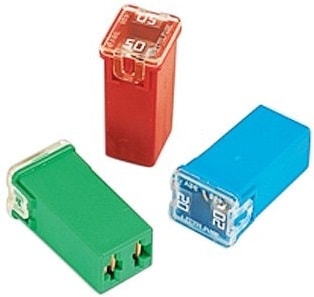
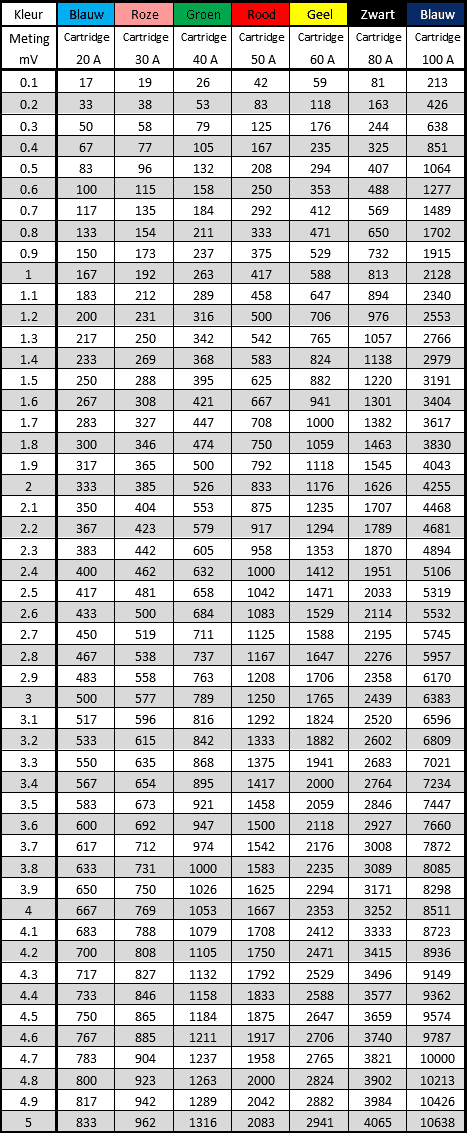
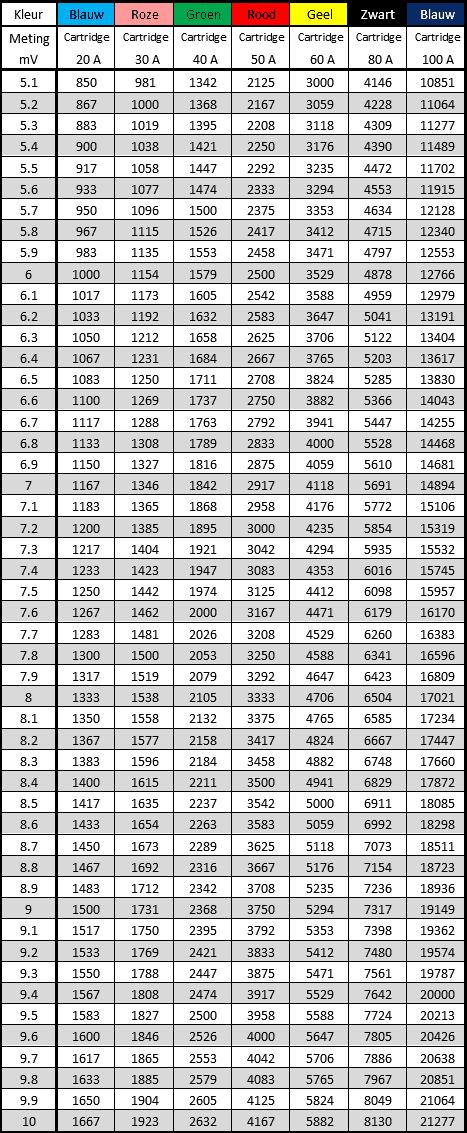
We often find this type of fuse in Japanese and Korean cars. The cartridge fuse consists of a square plastic housing with a transparent cover. The housing can be long or short. Through the transparent cover you can see the fuse wire and from that determine whether the fuse is still intact.
The tables below show the voltage drop across this type of fuse.
Related pages: