Introduction:
A fault in CAN bus communication can cause multiple functions in the vehicle to stop working, or even complete control units to fail. When a CAN bus fault is suspected, a diagnosis can be made by, among other things, measuring the voltage levels on the wires.
The content of the CAN bus message is not important at first. We can perform measurements on the CAN bus wires with both the multimeter and the oscilloscope. There is a limitation when using the multimeter: when measuring voltages, only an average value is displayed. The multimeter is only partially sufficient for detecting an open circuit or a short circuit. To measure the voltage levels and to assess whether the signal has a clean waveform, an oscilloscope is required.
How a CAN bus system works and how the messages are structured is explained on the CAN bus page. This page focuses on measuring the CAN bus with the oscilloscope and the multimeter and describes possible faults and their causes.
Diagnosing low / medium speed CAN bus signals:
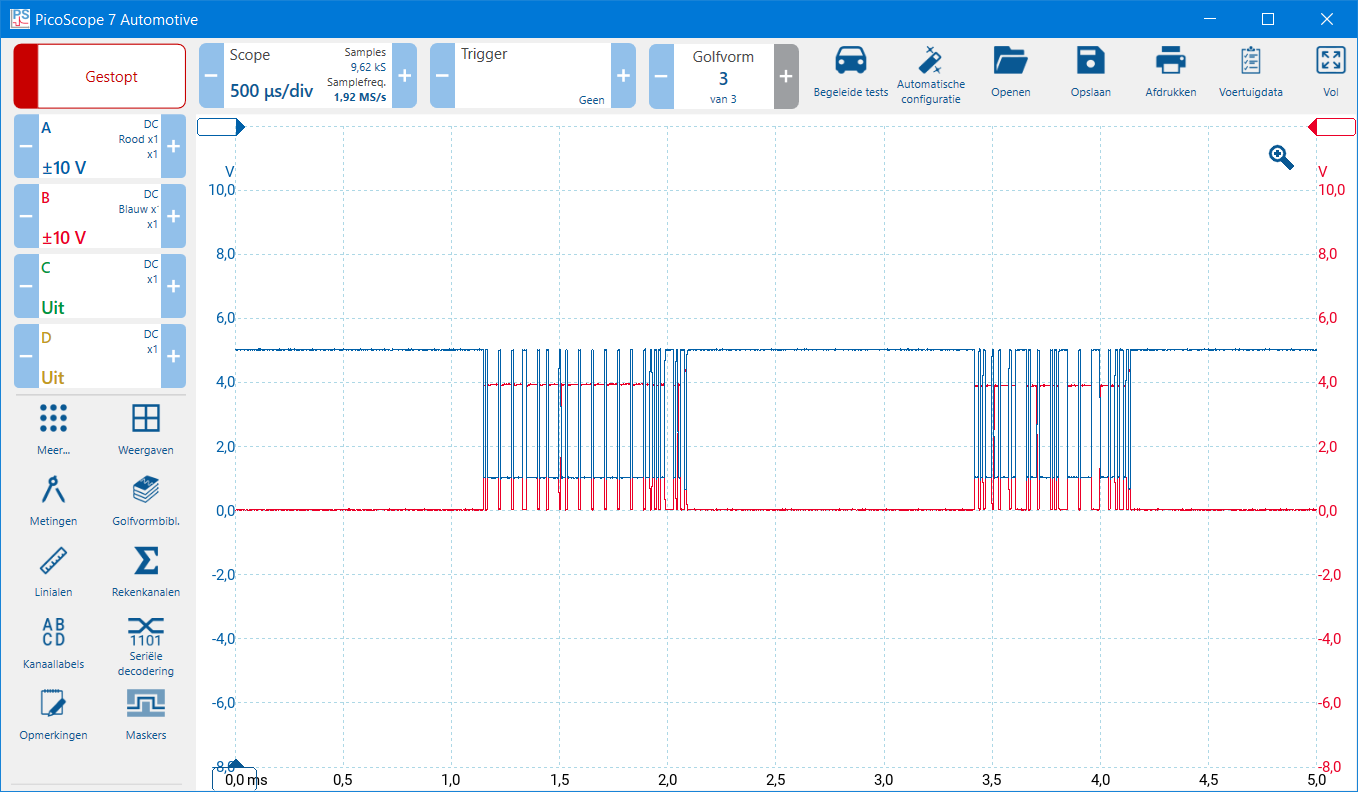
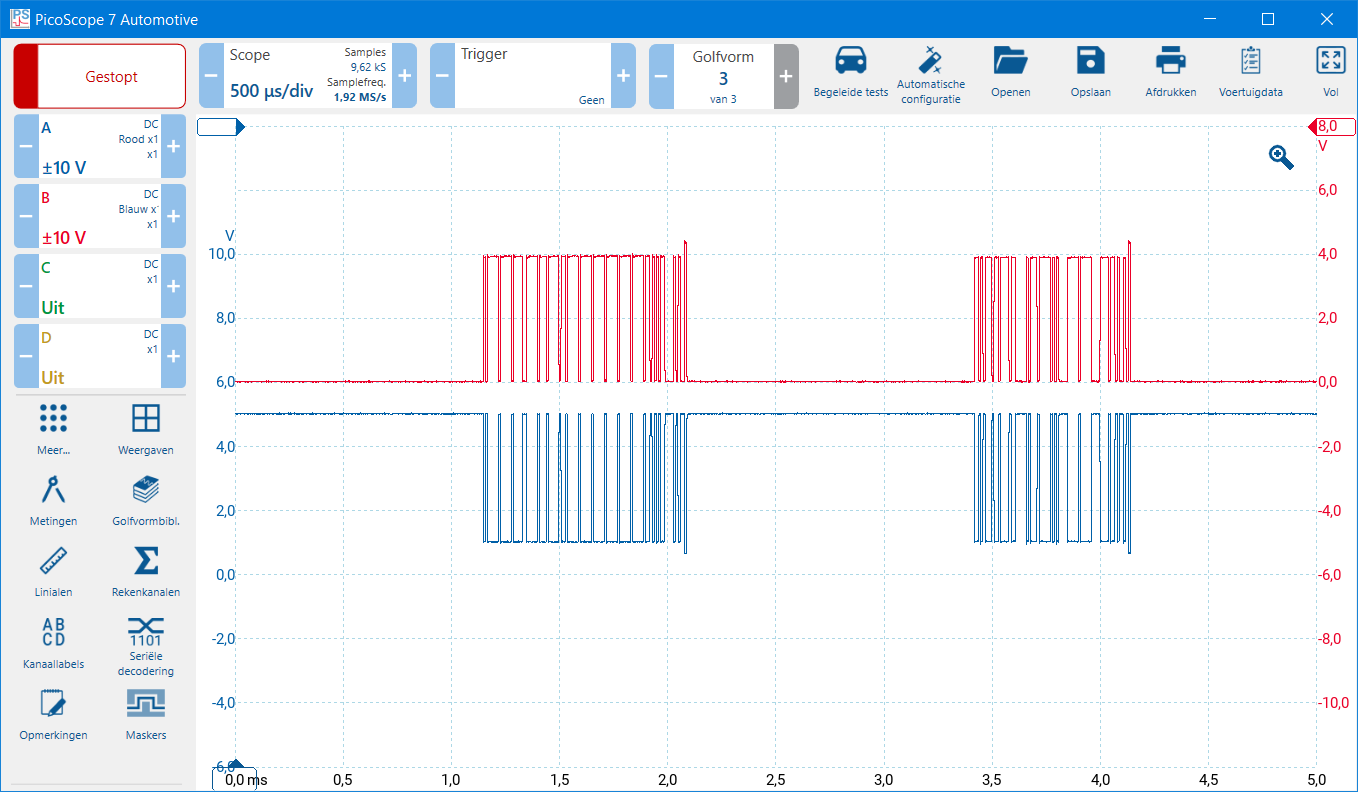
With a two-channel oscilloscope, CAN high and CAN low can be measured simultaneously relative to ground. The two scope images below show the CAN bus signal of the comfort bus. This is also referred to as “low speed” or “medium speed”. We often find this network in the comfort electronics, such as the door electronics, BCM, air conditioning control unit and the instrument cluster. The voltages are as follows:
- CAN low: at rest (recessive) 5 volts, active (dominant) 1 volt;
- CAN high: at rest (recessive) 0 volts, active (dominant) 4 volts.
As soon as we set the zero lines of both measurement channels at the same height on the Y-axes, the signals overlap each other. For easier reading, it is therefore advisable to shift the Y-axis of CAN low upwards. In the second image below, the zero lines have been moved, so that the voltage patterns of CAN high and CAN low can be easily compared.
Note: low and medium speed CAN networks are generally not equipped with termination resistors, in contrast to the high speed CAN network. The measurements carried out when diagnosing a fault are therefore also different. This paragraph shows the possible faults of the low and medium speed network, and the next paragraph covers the high speed network.
CAN high shorted to ground:
In CAN high there is a short to ground. If the insulation is damaged, the wiring can make contact with the bodywork, or a short circuit to ground can occur inside an ECU.
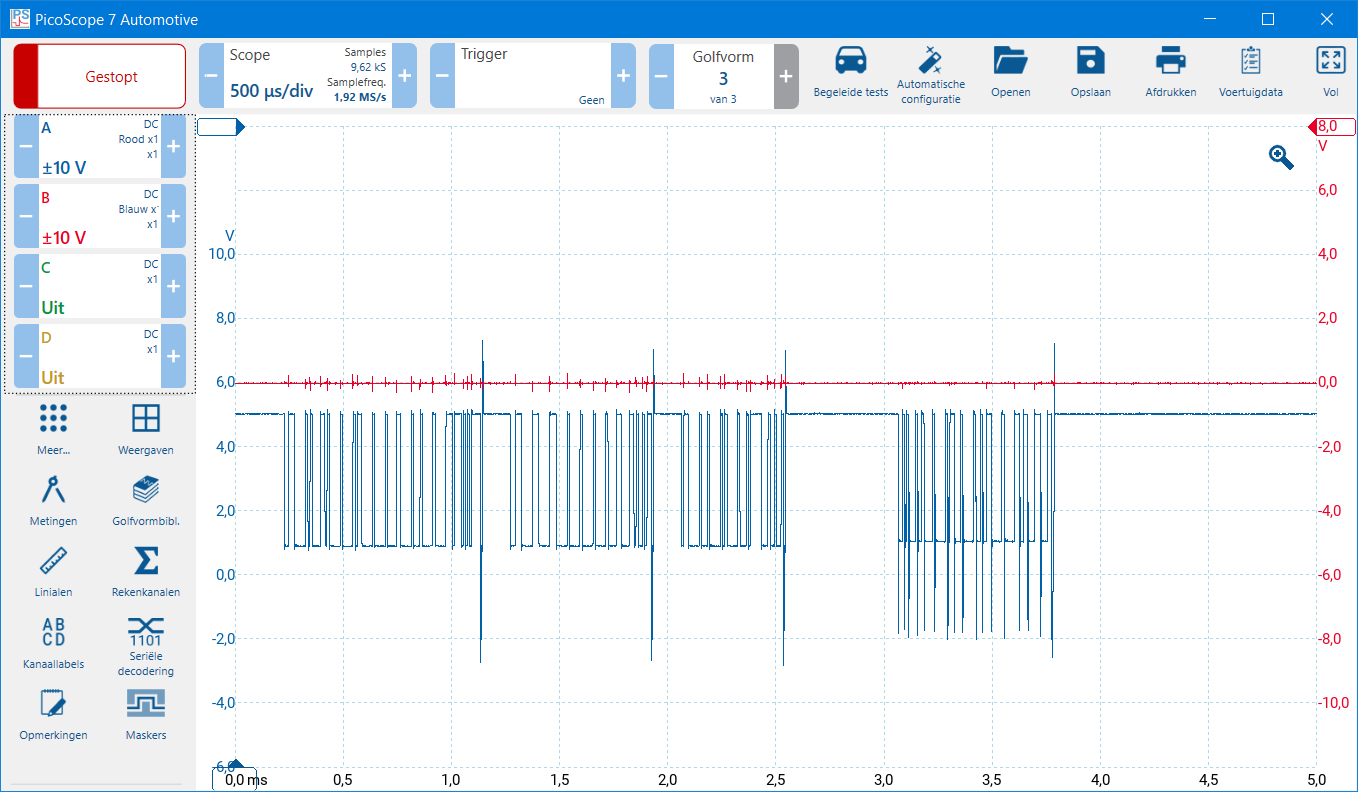
In the measurement below, we see a constant voltage line at 0 volts on channel B.
CAN low shorted to ground:
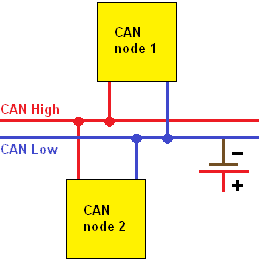
In CAN low there is a short to ground. If the insulation is damaged, the wiring can make contact with the bodywork, or a short circuit to ground can occur inside an ECU.
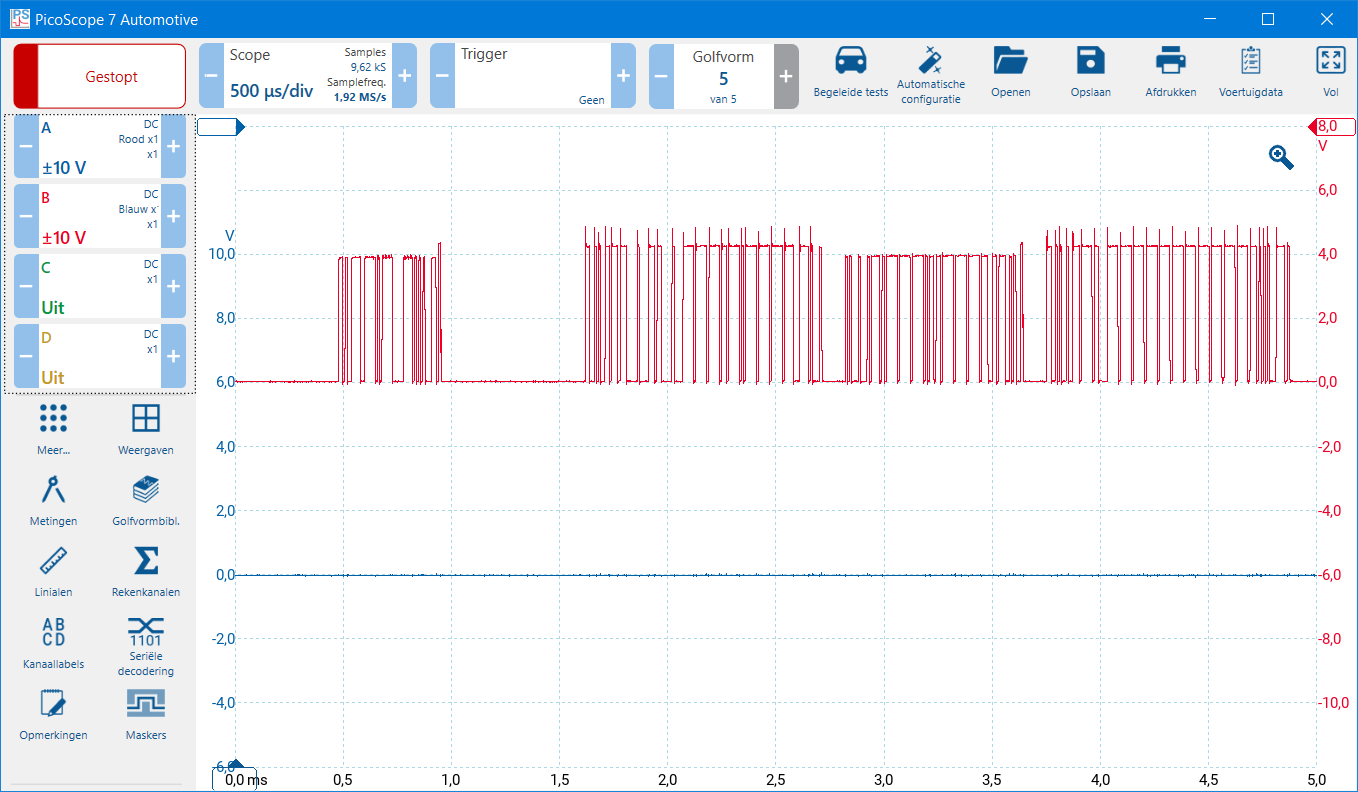
In the measurement below, we see a constant voltage line at 0 volts on channel A.
CAN high shorted to positive:
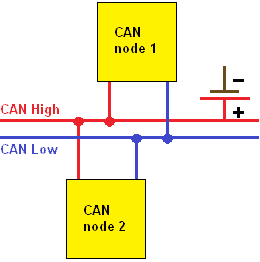
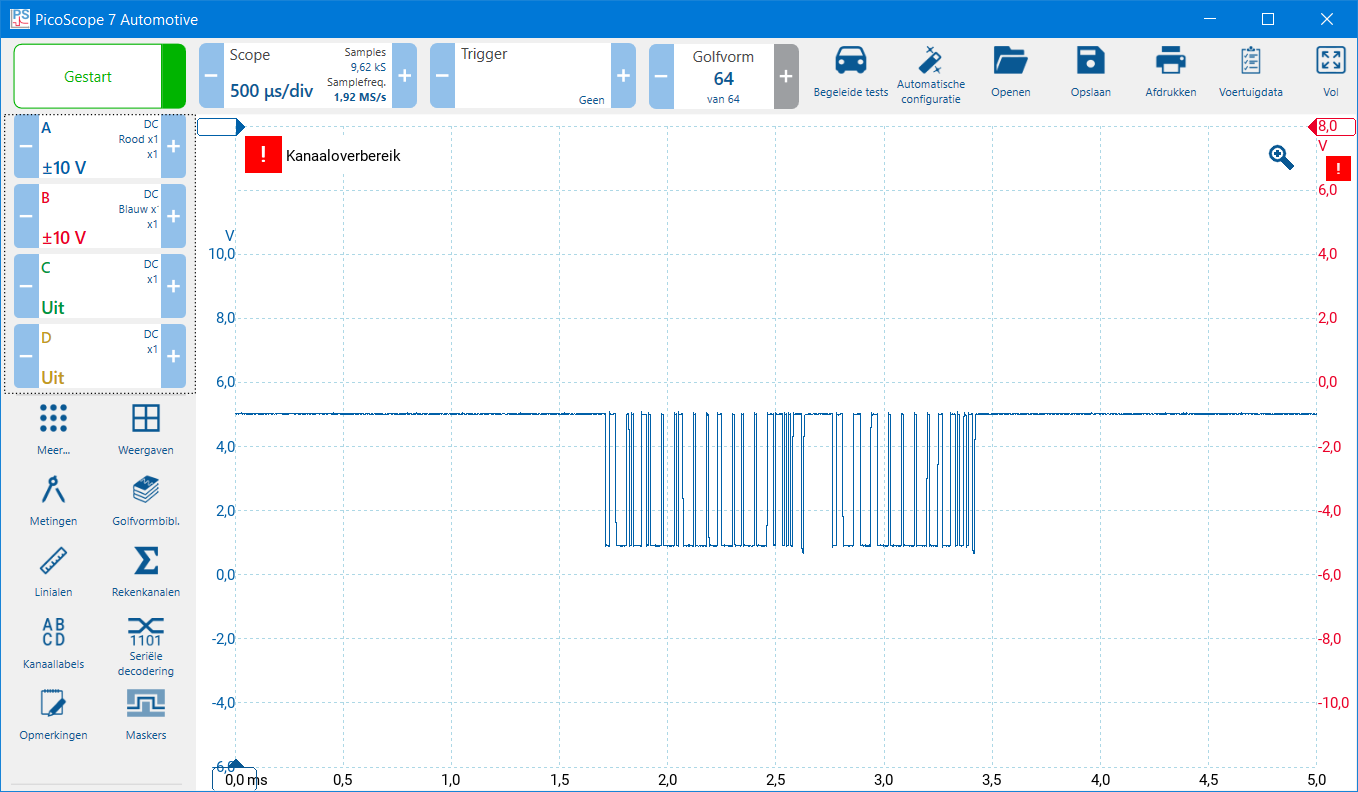
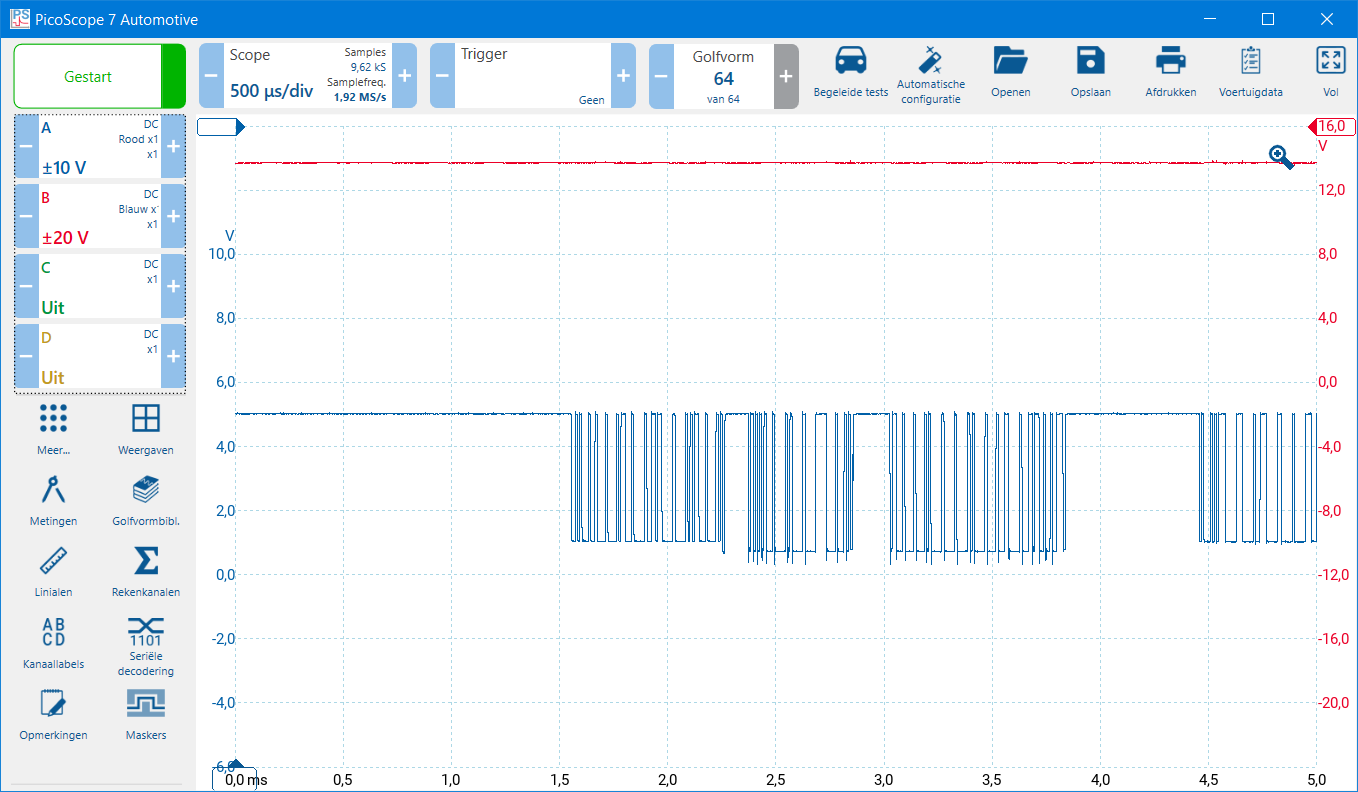
In CAN high there is a short to positive. If the insulation of multiple wires in a wiring harness is damaged, the wires can make mutual contact, or a short circuit to positive can occur inside an ECU.
In the two measurements below we see:
- Channel overrange: the voltage range of channel B (red) needs to be increased;
- On channel B (in the 20 V range) we see a constant voltage line equal to the battery voltage.
CAN low shorted to positive:
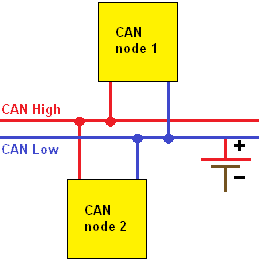
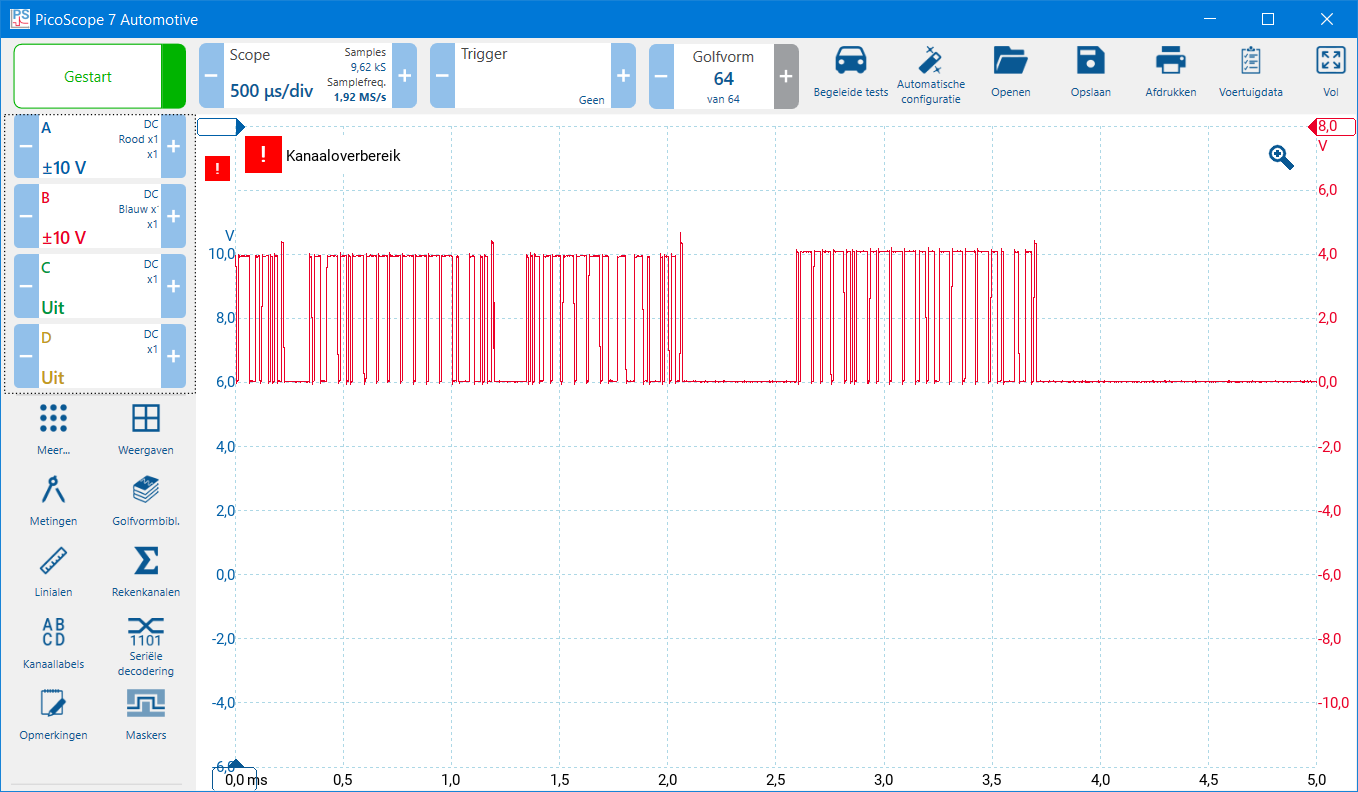
In CAN low there is a short to positive. If the insulation of multiple wires in a wiring harness is damaged, the wires can make mutual contact, or a short circuit to positive can occur inside an ECU.
In the two measurements below we see:
- Channel overrange: the voltage range of channel A (blue) needs to be increased;
- On channel A (in the 20 V range) we see a constant voltage line equal to the battery voltage.
CAN high shorted to CAN low:
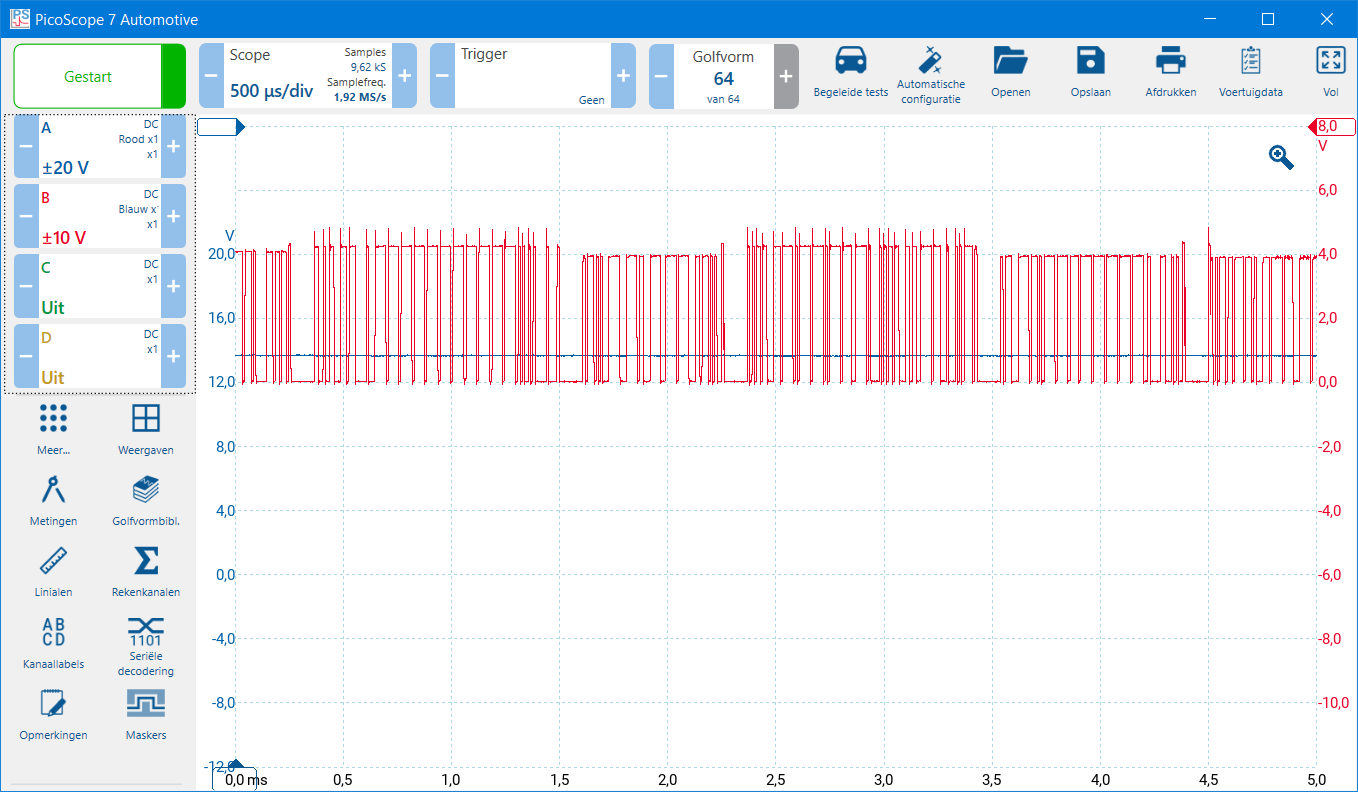
CAN low changes to follow the voltage pattern of CAN high when they are interconnected. A short circuit between CAN high and CAN low can occur in the wiring, where the insulation of both CAN bus wires has worn through, or due to a defect on the circuit board of an ECU.
In the image below we see the two-channel measurement in which CAN high and CAN low are shorted together.
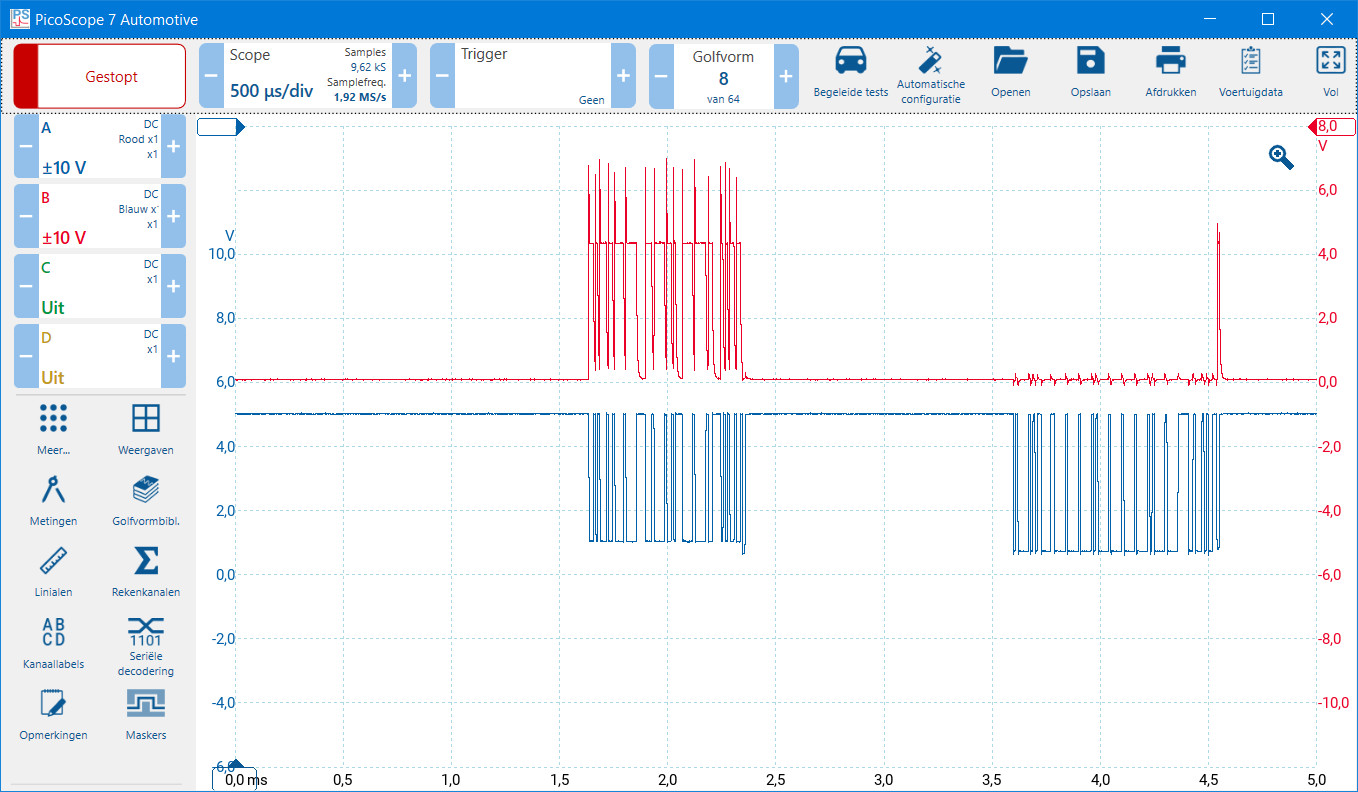
Communication on CAN high occasionally drops out:
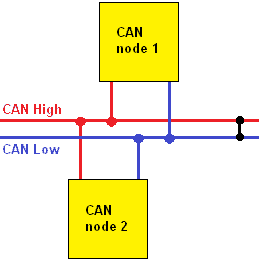
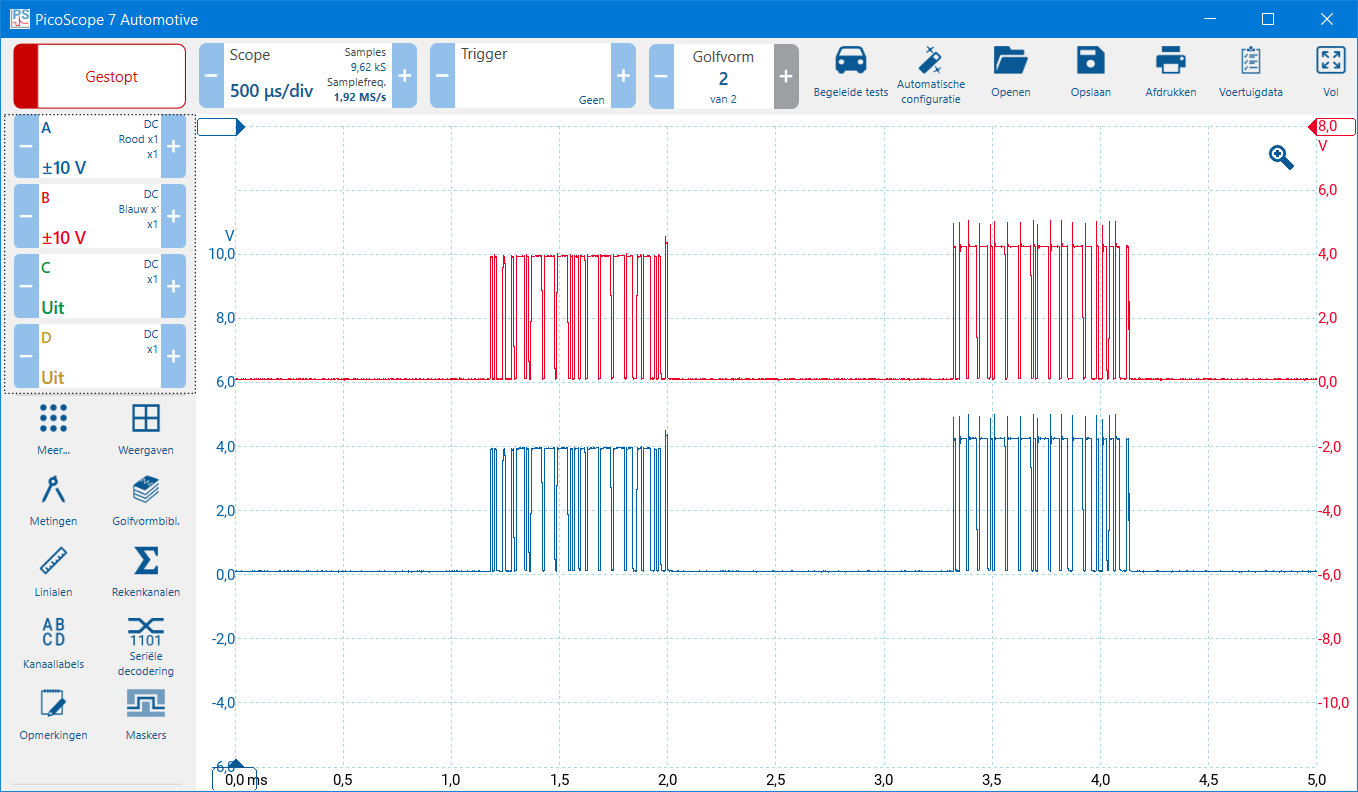
Communication with one control unit on CAN high is interrupted. This control unit no longer sends or receives data via CAN high, but CAN low is still functioning. As a result, communication and diagnostics are still possible.
When the connector of the relevant control unit is disconnected, the CAN low data also disappears and no difference between CAN high and CAN low is visible anymore.
In the image below we see that CAN high remains recessive at one point, while data is still being transmitted on CAN low.
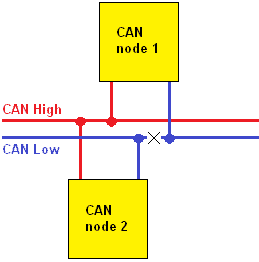
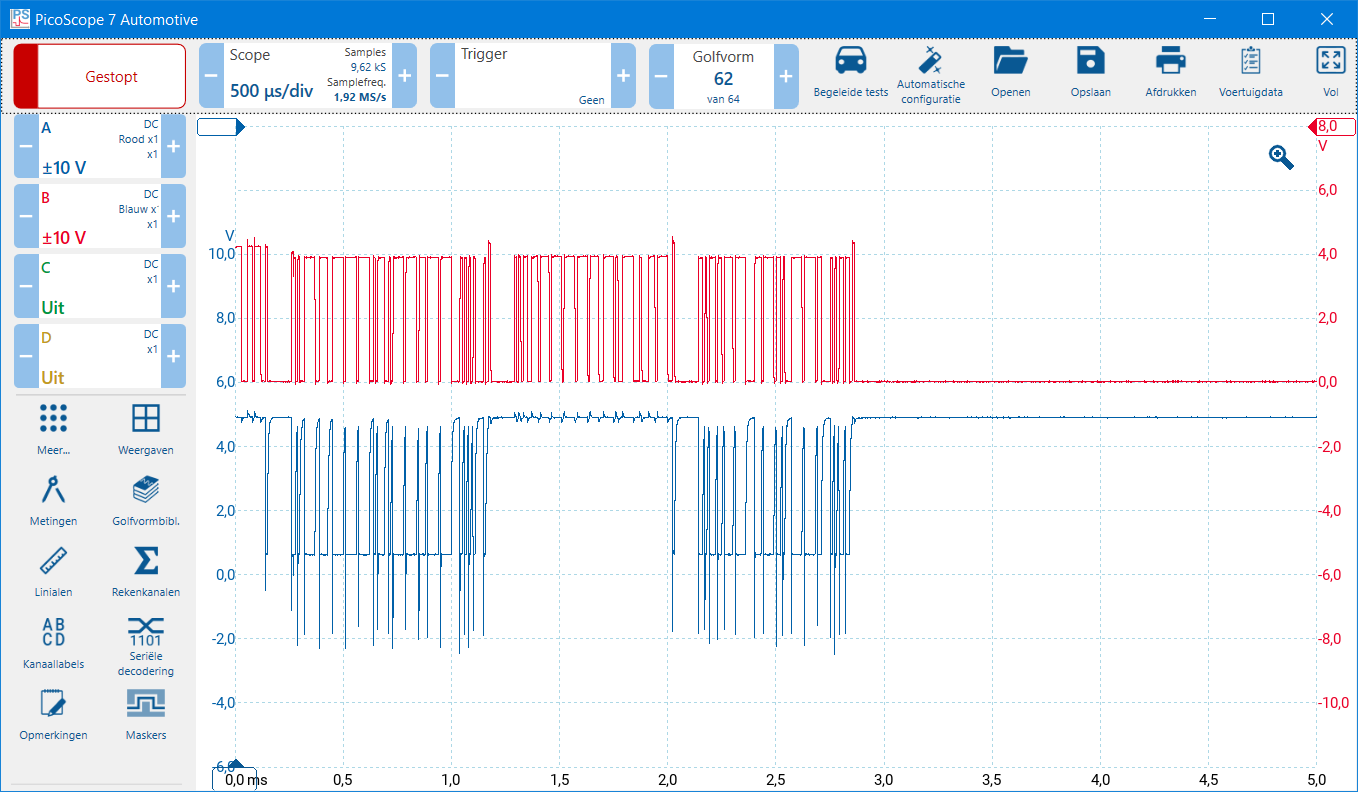
On CAN-low, communication occasionally drops out:
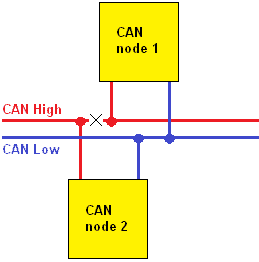
Communication with one control unit in the CAN-low is interrupted. This control unit no longer sends and receives data via the CAN-low, but the CAN-high is still functioning. As a result, communication and diagnostics are still possible.
When the connector of the respective control unit is disconnected, the CAN-high data also disappears and there is no longer any visible difference between CAN-high and CAN-low.
In the image below we can see that the CAN-low remains recessive at one point, while data is still being transmitted on the CAN-high.
Diagnosis of high speed CAN-bus signals:
The ECUs for which a high communication speed is of great importance are equipped with a high speed CAN network. These include, for example, the ECUs for the combustion engine, automatic transmission, ABS/ESP/EBS and the airbags. A high speed network is always equipped with termination resistors. Faults in the wiring and ECUs therefore also result in a different voltage pattern, which can sometimes make diagnosis more difficult than with a comfort network. As always, a fault-free situation is shown first before we proceed to faults.
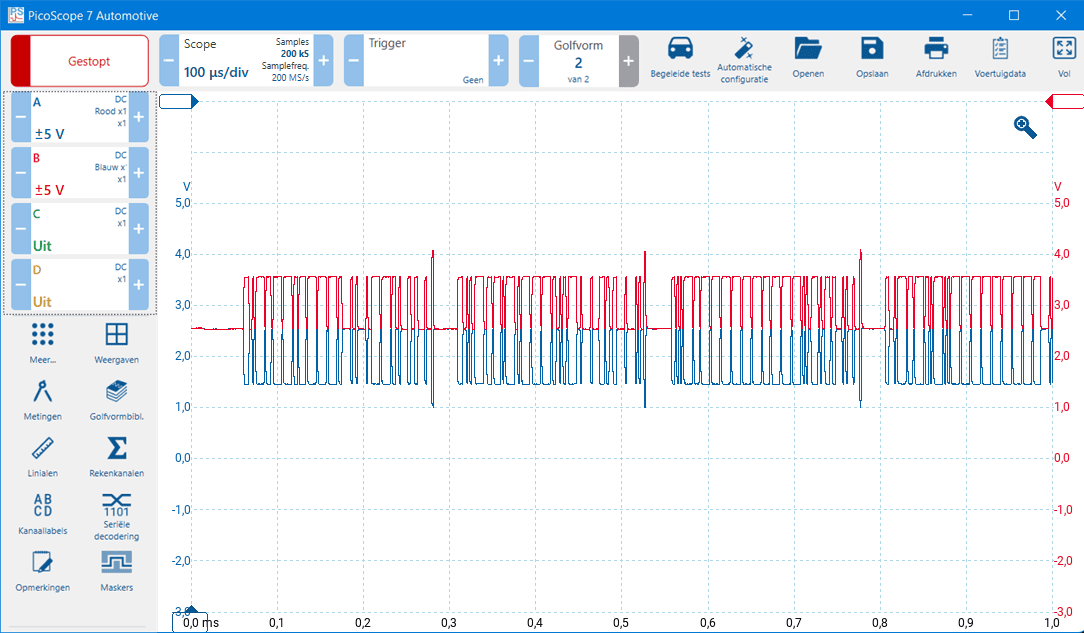
The voltages of a high speed network are as follows:
- CAN-high: at rest 2.5 volts, active 3.5;
- CAN-low: at rest 2.5 volts, active 1.5 volts.
When CAN-high and low are both 2.5 volts, the bus is recessive (at rest). When the CAN-high rises and CAN-low drops, the bus becomes dominant and a bit is formed. The image below shows a screenshot of a correct high speed CAN-bus signal.
If such a signal is measured and a lot of noise is visible, it is advisable to remove the battery charger from the vehicle, connect the oscilloscope to the vehicle ground (on automotive scopes there is a “ground” connection on the rear for this purpose), and use the sampling frequency to clean up the signal. With the sampling frequency, the signal is smoothed out, so when it deviates too far from the standard value, the CAN signal can become too distorted.
For clarity: in the image below, CAN-high is red and CAN-low is blue.
CAN-high shorted to ground:
There is a ground short in the CAN-high. If the insulation is damaged, the wiring may contact the bodywork, or a short to ground may occur inside an ECU.
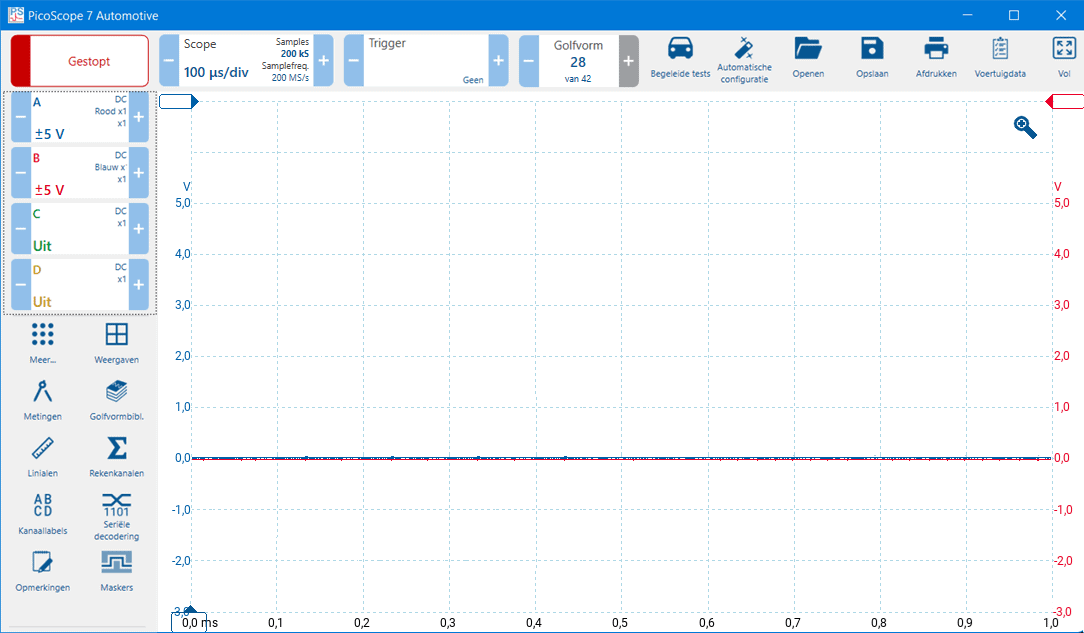
In the measurement below we see that CAN-high (red) is exactly 0 volts, because it has a short to ground. CAN-low (blue) is slightly above the zero line. Zooming in on this signal would make this even clearer. Because CAN-high is exactly 0 volts and CAN-low is a few tenths of a volt higher, we can conclude that CAN-high has a short to ground.
CAN-low shorted to ground:
There is a ground short in the CAN-low. If the insulation is damaged, the wiring may contact the bodywork, or a short to ground may occur inside an ECU.
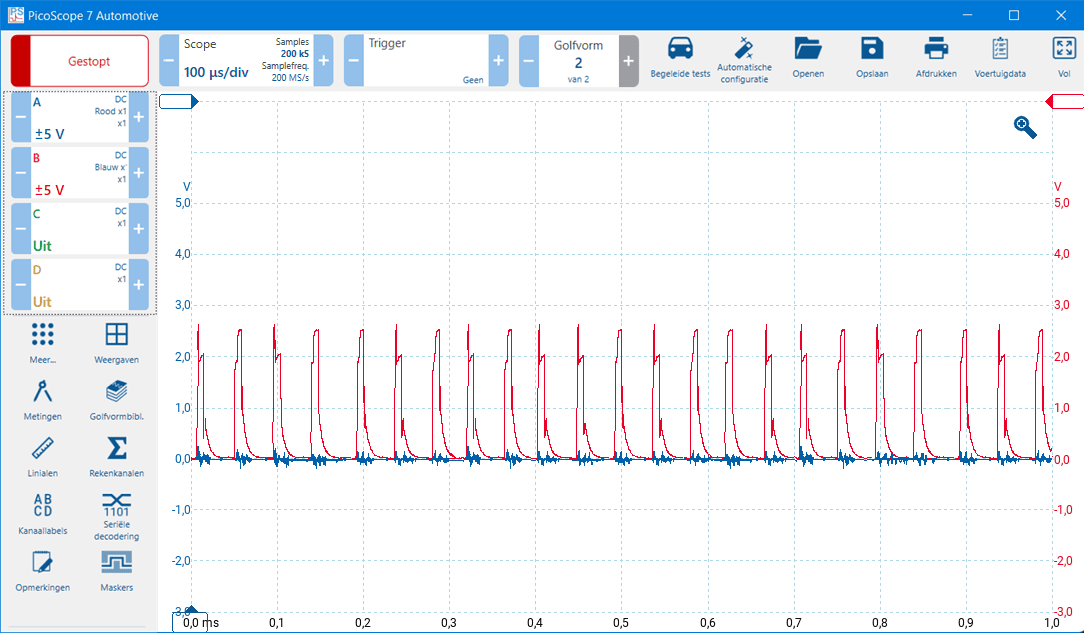
In the measurement below we can see that CAN-low is at 0 volts. Some noise is visible, but we can ignore that. CAN-low is shorted to ground. We can see the voltage line of CAN-high increase repeatedly, but that is not enough to initiate communication. The scope image also shows that CAN-low is always at a lower voltage than CAN-high (red is always slightly higher than blue), from which we can assume that CAN-low is shorted to ground.
CAN-high shorted to positive:
There is a positive short in the CAN-high. If the insulation of multiple wires in a wiring harness is damaged, the conductors can make contact with each other, or a short to positive can occur inside an ECU.
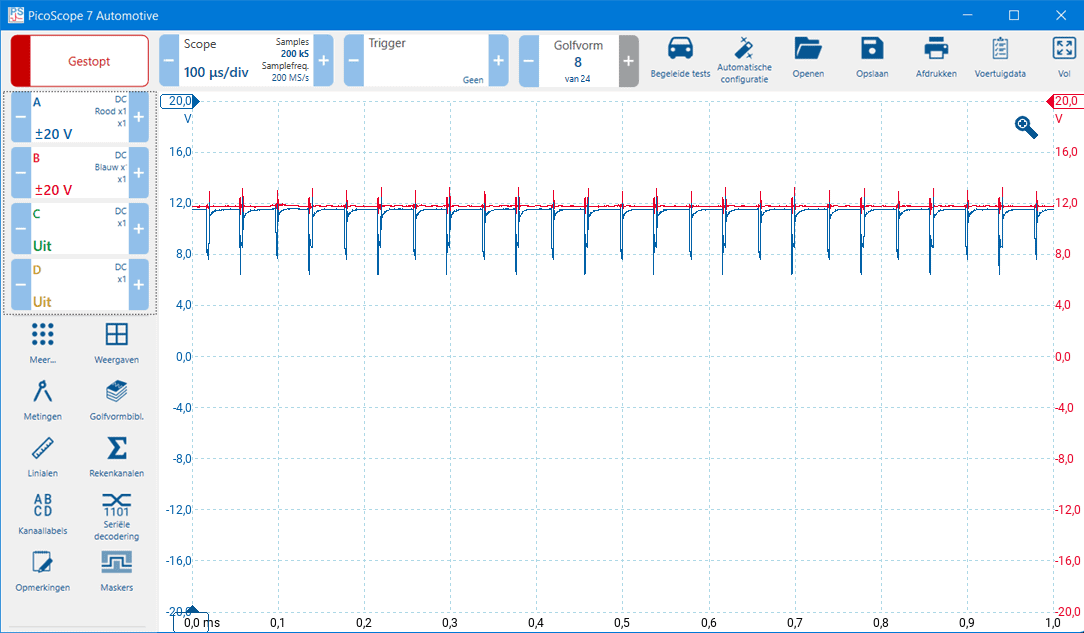
In the image below we see a phenomenon that resembles the situation where CAN-low was shorted to ground. CAN-high (red) has risen to the on-board voltage of around 12 volts. CAN-low (blue) has also risen in voltage and is still trying to communicate by lowering the signal. Because communication does not start, the negative voltage spikes keep repeating.
CAN-low shorted to positive:
There is a positive short in the CAN-low. If the insulation of multiple wires in a wiring harness is damaged, the conductors can make contact with each other, or a short to positive can occur inside an ECU.
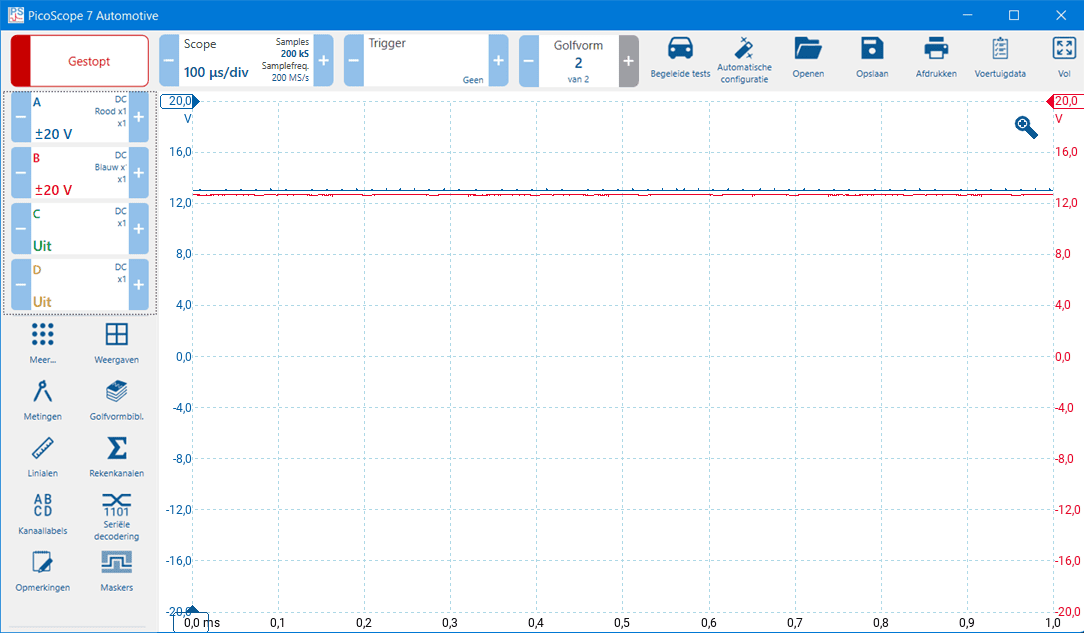
In the measurement below we can see that CAN-high and CAN-low are around 12 volts. However, the voltage of CAN-low is about 200 mV higher than CAN-high. CAN-low has pulled CAN-high upwards with it. From this we can recognize that CAN-low is shorted to positive.
CAN-high shorted to CAN-low:
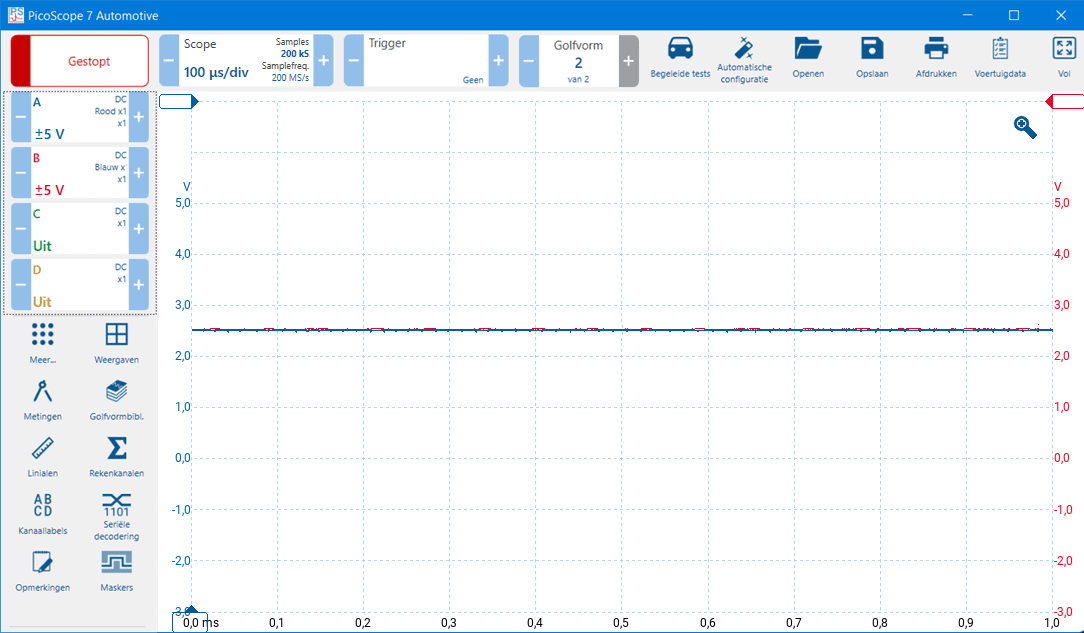
The CAN-low changes to the voltage pattern of CAN-high when they are connected together. A short between CAN-high and CAN-low can arise in the wiring, where the insulation of both CAN-bus wires has worn through, or due to a defect in the circuit board of an ECU.
In the image below we see the two-channel measurement where CAN-high and CAN-low are shorted together. The voltage on both channels is 2.5 volts.
Diagnosis with the multimeter:
Measuring CAN-bus voltage levels with a multimeter is unwise. With voltages that fluctuate greatly in amplitude, the multimeter displays average values, which prevents proper diagnosis. An oscilloscope must be used to measure the voltages.
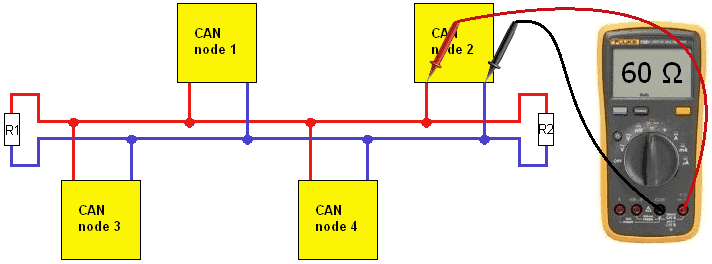
We can, however, use the multimeter to measure the resistance values of (only) a high-speed CAN network with termination resistors. The measurements below show the ohmic resistance in three different situations: with a correctly functioning system, a broken wire, and a short circuit between CAN-high and CAN-low. In a low / medium (comfort) network, termination resistors are rarely used, and these measurements cannot be carried out.
No faults:
On the CAN-bus page it is explained that there are two termination resistors in the network. The termination resistors each have a resistance of 120 ohms. With a fault-free system, we will measure a resultant resistance of 60 ohms between CAN-high and CAN-low.
Note: we can only measure this when the supply voltage of all control units is switched off!
Interruption:
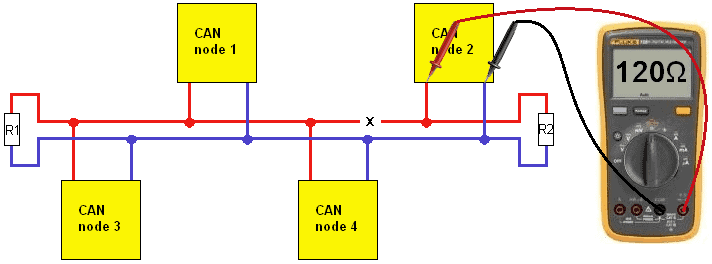
In the event of an interruption in a CAN-high or CAN-low wire, we no longer measure the resultant resistance of 60 ohms. In the figure, we measure only the value of resistor R2 (120 ohms).
Short circuit:
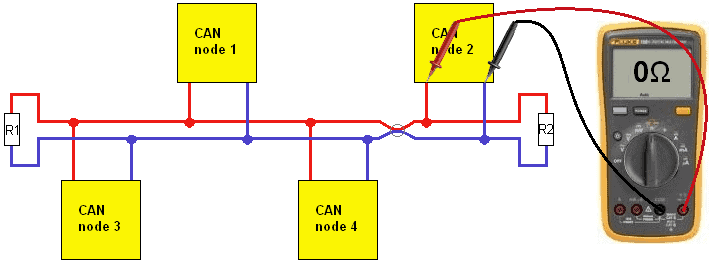
In the situation where the CAN-bus wires make contact with each other (so are shorted together), we measure a resistance value of approximately 0 ohms.
In the following fault, both CAN wires are interrupted. A lot of interference (noise) will now be present on the bus. Nodes 1, 3 and 4 can communicate with each other provided that the interference and reflection are not too great, causing the messages to become distorted. Likewise, node 2 and 5 can communicate with each other, subject to the same problem.
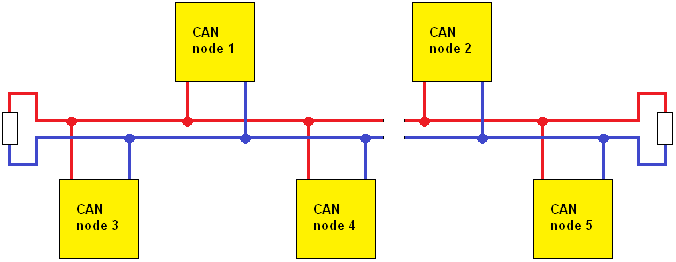
Some CAN networks continue to function even when one wire is interrupted. Fault codes will be stored, and the driver will be notified by warning lights and messages from various systems. These are the networks that are equipped with a Fault Tolerant CAN transceiver. Depending on the transceiver used, different types of faults can occur without the communication between the nodes being lost. These CAN transceivers can also continue to operate normally in the previously mentioned fault conditions with short circuits to positive and ground (although there will of course be various fault messages).