Gaskets:
Every engine contains gaskets and oil seals. Gaskets are used to mount two parts of the engine against each other. The two parts can both be made of cast iron, but also of plastic on iron. Depending on the type of material of the engine, a paper, aluminium or rubber gasket is fitted. Sometimes a layer of sealant is also applied which serves as a gasket.
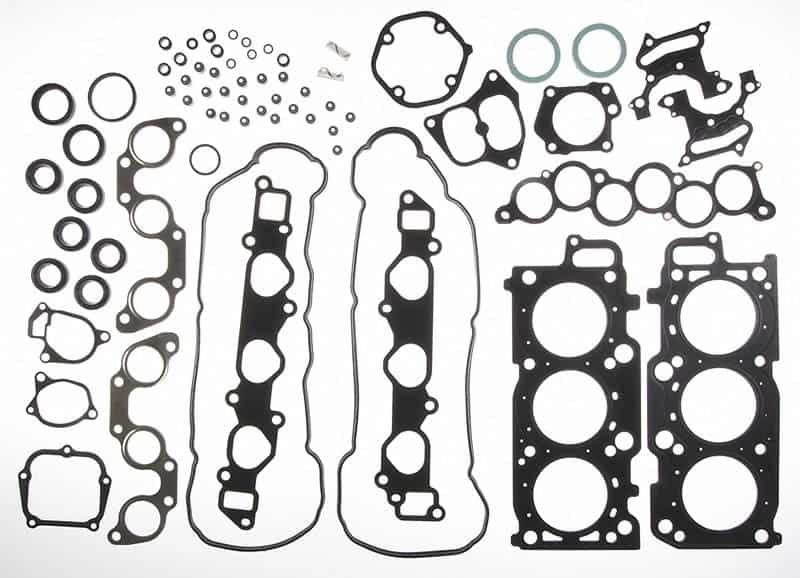
Below is an overview of all gaskets of a cylinder head of a Lexus RX300:
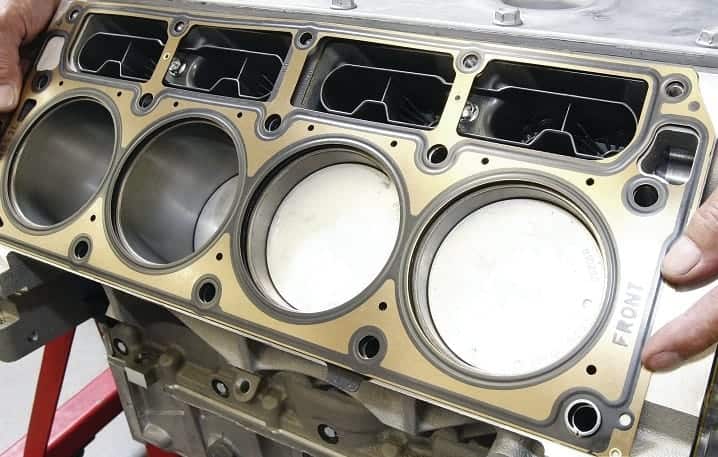
The cylinder head gasket (usually simply called the head gasket) is the gasket that has to endure the most. The head gasket is mounted between the rotating section of the engine block and the cylinder head. With every power stroke of the engine, the piston is pushed down by the combustion force. This combustion force acts against the cylinder head, because the space between the cylinder head and the piston must become larger as the piston moves downward. The head gasket is placed between the two engine parts and ensures that the combustion gases cannot escape from one cylinder to another. The head gasket also seals the oil and coolant passages that run from the engine block to the cylinder head.
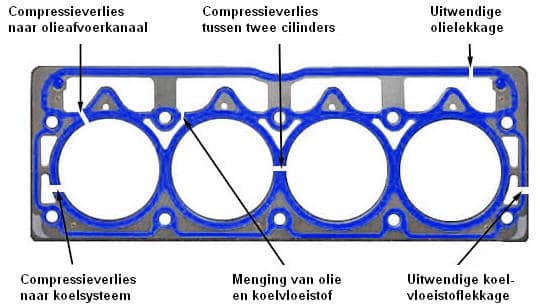
A faulty head gasket can be recognized in several ways as follows:
- Oil and coolant start to mix because the gasket between both passages has torn.
- Smoke comes out of the car’s exhaust because the head gasket has torn between an oil or coolant passage and the cylinder.
- Oil or coolant loss is visible on the outside of the engine block (external leakage) because the head gasket has torn at that location.
- There is a loss of compression because the head gasket has torn between two combustion chambers.
There are also several other causes for the defects mentioned above, because a mixture of oil and coolant can also occur when the heat exchanger is cracked internally. Smoke from the exhaust can also be caused by worn piston rings or defective valve stem seals (blue smoke), or white smoke by a crack in the EGR cooler or the cylinder head (coolant). Loss of compression can also have many other causes. It should now be clear how much “responsibility” the head gasket has for the operation of the engine.
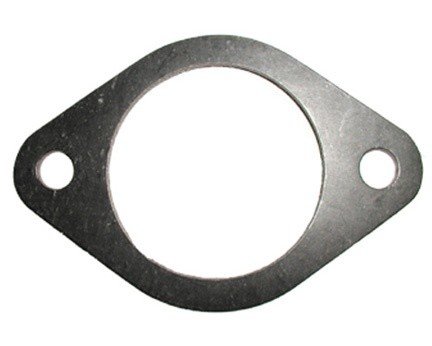
Gaskets between components have one important task: sealing. In the image you can see a gasket of an EGR pipe.
This sealing gasket is mounted in the space between the EGR valve and the EGR pipe. The exhaust gases flow through the large opening and cannot escape thanks to the gasket. With 2 bolts the EGR pipe is mounted on the valve and the gasket is clamped in between.
Because the gasket is clamped, it will conform on one side to the valve and on the other side to the pipe. That is no problem when it is mounted, as this ensures an even better seal. When the parts are disassembled, however, it is important to replace the gasket. If it is refitted after disassembly, the chance of leakage is very high. Especially if the gasket is reversed, the deformation of the material will certainly cause problems. Whenever engine components are removed (think of exhaust components, the thermostat housing, the intake manifold, etc.) the gaskets must always be replaced.
Oil seals:
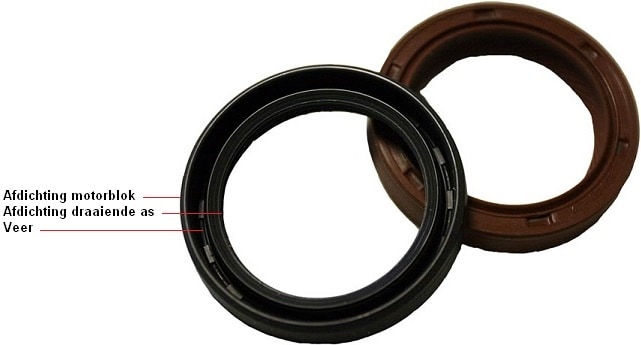
There are many rotating parts in the engine. Sometimes the rotating parts are visible from the outside, such as the pulleys of the crankshaft and camshaft. To provide a seal between the rotating parts and the engine block, oil seals are used (see image).
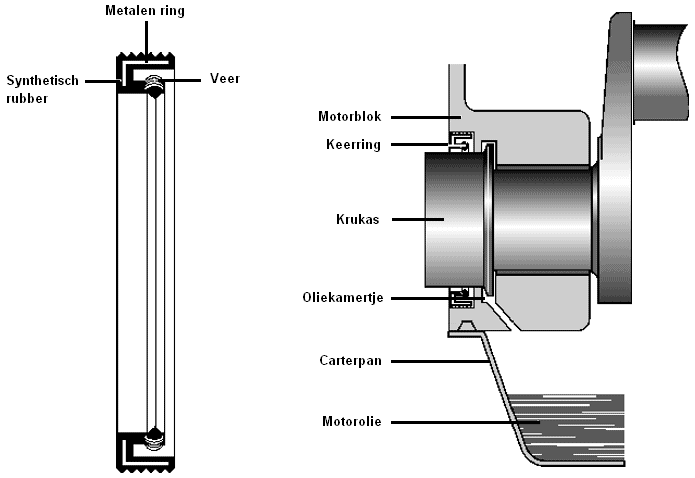
The outer side of the oil seal provides the seal against the engine block and the inner side against the rotating shaft (e.g. the crankshaft or camshaft). There is a spring inside the oil seal. This spring makes use of the elasticity of the oil seal; the inner side is pressed extra firmly against the shaft by the spring.
In the image below you can see a crankshaft oil seal. Here you can clearly see how the seal is mounted between the engine block and the crankshaft. There is also a small oil gallery in the engine block that leads to the oil seal. Through this small oil passage the engine oil can reach the small oil chamber. Through this oil passage a small amount of oil can get between the crankshaft and the rubber of the seal. This prevents the rubber of the seal from failing because the material of the crankshaft rubs against it. The crankshaft has an oil seal at both ends; at the front (this is often the timing side) and at the rear (where the flywheel is mounted).
Replacing the oil seal sometimes requires a lot of work. When the crankshaft oil seal on the flywheel side is leaking, for example the entire gearbox and the clutch with the flywheel must be removed. The crankshaft oil seal on the other side, usually where the multi-rib belt and possibly the timing belt are located, is easier to reach. The old seal can often be knocked out with a screwdriver and a hammer. Be very careful not to create any scratches. The new seal will not seal these scratches, so oil leakage is guaranteed.
The new seal is often supplied with a piece of special tooling. This is usually a plastic cap on the inside of the seal. This plastic cap provides a certain preload on the spring on the inside of the seal so that the seal is easier to install. During installation, the seal must be lubricated with grease or oil, otherwise it may be damaged during fitting. Damage to the seal will of course also result in leaks.
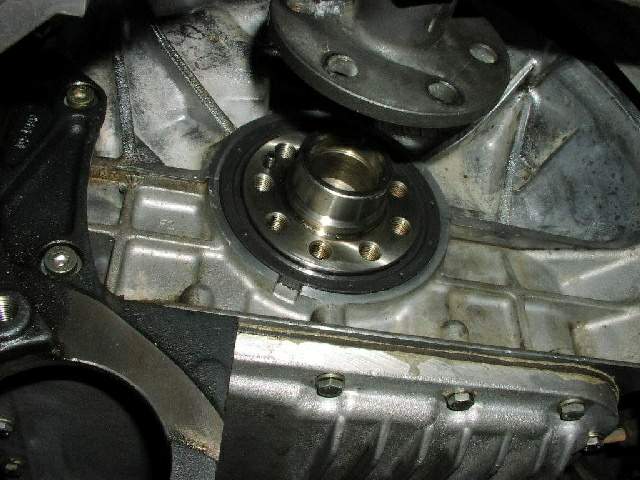
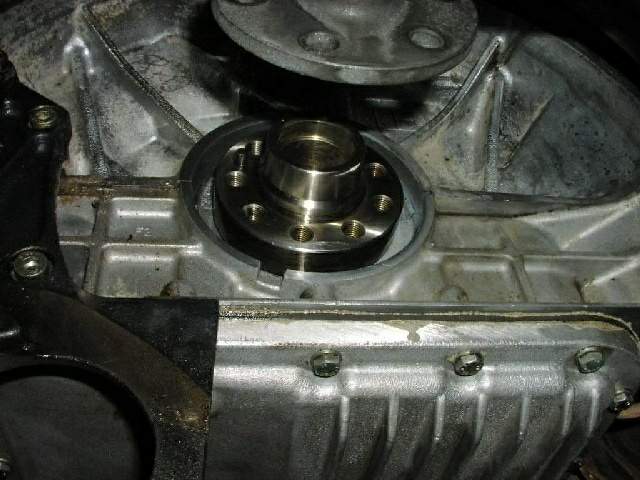
In the two images below you can see a crankshaft flange with and without the crankshaft oil seal:
Related page: